Truffles in Tuscany: Between Season, Terroir and Artificial Aroma
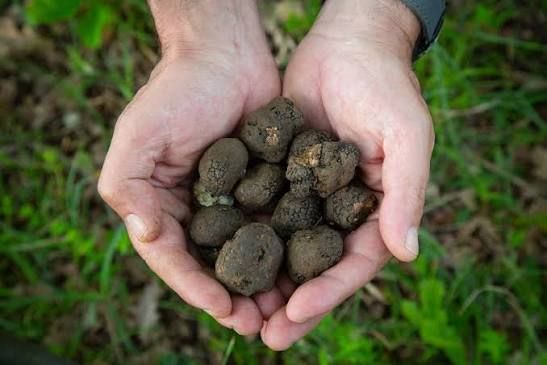
In Brief
Tuscany is home to several truffle species throughout the year, from the Marzuolo and summer truffle to Tuber melanosporum and the prized white truffle. Yet many so-called truffle products rely mainly on added flavourings, especially 2,4-dithiapentane, rather than on meaningful quantities of real truffle. This article explores the differences between species and seasons, the reality behind truffle cheese and truffle olive oil, the importance of historic markets such as San Miniato and San Giovanni d’Asso, and the need for greater transparency in truffle hunting experiences. It also presents the Grape Tours Special Truffle Hunting Tour, organised with genuine local professionals and focused on seasonality, traceability and authentic Tuscan knowledge.
Keywords: Tuscan truffles, truffle season Tuscany, white truffle Tuscany, black truffle Tuscany, Marzuolo truffle, summer truffle, Tuber magnatum Pico, Tuber melanosporum, truffle flavouring, 2,4-dithiapentane, artificial truffle aroma, natural truffle aroma, truffle oil, truffle cheese, truffle hunting Tuscany, San Miniato truffle market, San Giovanni d’Asso, authentic truffle experience, Grape Tours truffle hunting, Tuscan food tourism
Truffles in Tuscany: Between Season, Terroir and Artificial Aroma
Tuscany Does Not Have One Truffle Season
In Tuscany, truffles are often presented to visitors as a single luxury ingredient: rare, mysterious and available almost whenever a restaurant wishes to place the word truffle on its menu.
The reality is more complex—and much more interesting.
Tuscany produces several species of truffle, each connected to a particular season, soil, climate and landscape. Their aromas, culinary qualities and commercial values vary enormously. A fresh white truffle bought in November should not be confused with a summer truffle served in July, still less with a cheese, sauce or bottle of olive oil whose “truffle” character comes primarily from added flavouring.
Understanding Tuscan truffles therefore begins with a simple principle: real truffles belong to seasons.
Under current Tuscan legislation, harvesting periods differ by species, while May and September are ecological rest months during which truffle hunting is prohibited throughout the region.
From the Marzuolo to the Summer Truffle
The Tuscan truffle year begins during winter and early spring with the Marzuolo, also known as bianchetto, Tuber borchii or Tuber albidum.
Despite its common name—which evokes March—it may legally be collected in Tuscany from 15 January to 15 April. Its appearance can resemble that of the prestigious white truffle, but its aroma is generally more pungent, garlicky and less elegant. It is considerably less valuable than Tuber magnatum Pico, although it is sometimes presented to inexperienced consumers simply as “white truffle.”
After the ecological closure in May comes the summer truffle, Tuber aestivum, commonly called scorzone. Its first Tuscan harvesting period runs from 1 June to 31 August, with a second period from 1 October to 30 November.
The scorzone is firm, dark on the outside and relatively mild in aroma. It can be pleasant when fresh and correctly ripened, particularly in simple preparations where it is not overwhelmed by cream, cheese or added flavouring. But it should not be expected to deliver the extraordinary aromatic intensity of the finest winter truffles.
In autumn, Tuscany also produces the uncinato, Tuber aestivum forma uncinatum, which may be collected from October to mid-January. It is closely related to the summer truffle but generally develops a deeper aroma under cooler and more humid conditions.
The Great Winter Black Truffle
The precious black truffle, Tuber melanosporum Vittad., is the celebrated black truffle traditionally associated with Périgord but also found and cultivated in suitable Tuscan soils.
In Tuscany, its legal harvesting season runs from 15 November to 15 March. It has a dark, finely textured flesh and a complex aroma that can suggest woodland, earth, cocoa, fermentation and warm spices. Unlike the white truffle, which is normally shaved raw at the last moment, melanosporum can benefit from gentle heat, which helps release part of its aromatic complexity.
It must not be confused with the less prestigious winter truffle, Tuber brumale, or with other dark species that may have a similar external appearance but a different fragrance, texture and market value.
This distinction matters because the commercial expression “black truffle” says very little by itself. It can refer to melanosporum, summer truffle, winter truffle or simply a food flavoured to evoke truffle.
The Latin name is often the most reliable piece of information a consumer can request.
The Tuscan White Truffle
At the top of the Tuscan hierarchy is the precious white truffle, Tuber magnatum Pico.
Its Tuscan harvesting season extends from 1 October to 15 January, although November is generally the month most strongly associated with its markets and gastronomic celebrations.
The white truffle cannot be understood through strength alone. Its fragrance is complex, volatile and sometimes provocative, combining sulphurous, fermented, earthy, animal and honeyed notes. Truffle aroma is not generated by one single molecule but by a varied composition of volatile compounds whose balance differs among species and individual specimens.
This fragility explains why fresh white truffle should be consumed quickly and treated with restraint. It does not need truffle oil, truffle cream or a heavily flavoured sauce. It needs a warm but simple carrier—egg, butter, fresh pasta, risotto or potato—over which it can be shaved immediately before eating.
A genuine white truffle is never merely “truffle flavour.” It is an ephemeral agricultural and woodland product whose aroma changes from one specimen to another.
When “Truffled” Does Not Mean Made with Truffle
The difficulty begins when the adjective truffled is applied to products such as cheese, salami, sauces, crisps, butter, honey, pasta, mayonnaise and olive oil.
Some contain identifiable pieces of real truffle. Others contain very small quantities of inexpensive truffle species. Many depend mainly—or almost entirely—on added flavouring.
This does not automatically make the product illegal or unsafe. But it often creates a misleading sensory impression. Consumers believe they are learning the taste of truffle when they are actually learning to recognise a concentrated aromatic formula.
The distinction between natural flavouring and artificially produced flavouring can also be less meaningful than it appears.
A “natural truffle flavour” does not necessarily mean that the aroma was extracted from fresh Tuscan truffles. Depending on the formulation and labelling, flavouring substances may originate from other natural raw materials and be transformed or combined to reproduce a recognisable truffle-like note.
Conversely, a chemically synthesised molecule may be identical to a molecule that also occurs naturally in a truffle. What matters gastronomically is not simply whether a molecule is “natural” or “synthetic,” but whether the product genuinely contains truffle, which species it contains, how much is present and whether added aroma is doing most of the sensory work.
The Molecule Behind the Truffle Illusion
The compound most commonly associated with commercial truffle flavouring is 2,4-dithiapentane, also called bis(methylthio)methane.
It is an organosulphur compound and one of the volatile substances associated particularly with the aroma of white truffles. It is not, however, the complete aroma of a truffle. A real truffle contains a much broader and more variable aromatic system involving numerous volatile compounds.
2,4-Dithiapentane can be obtained from natural sources or manufactured industrially. In the European Union, it is authorised for use as a flavouring substance.
This point requires scientific honesty. Claims that any food containing this molecule is inherently poisonous or carcinogenic are not supported by current European regulatory assessments. At authorised levels of food use, it is not classified as presenting a demonstrated health concern.
That does not mean the concentrated chemical is harmless in every situation. In concentrated form, it may irritate the skin, eyes and respiratory tract and may act as a skin sensitiser. These hazards are especially relevant to occupational handling and direct exposure to concentrated substances, not equivalent to ordinary consumption of a correctly formulated food product.
The strongest criticism of truffle flavouring should therefore not rely on exaggerated toxicological claims. The more credible concern is one of transparency, sensory distortion and culinary deception.
A single dominant sulphur molecule can produce an immediate and aggressive “truffle” signal. But it cannot reproduce the subtle, evolving and unstable aroma of a freshly harvested truffle.
Truffle Cheese: When Aroma Overpowers Affinage
Cheese and truffle can form a beautiful combination, but only when both ingredients retain their identity.
In many industrial “truffle cheeses,” inexpensive summer truffle pieces are added mainly for visual effect, while flavouring provides the powerful aroma. The consumer sees black fragments and assumes that they are responsible for the smell, even when the aromatic intensity would be impossible to obtain from that quantity and species of truffle alone.
The added aroma often dominates the milk, the fermentation, the rind and the cheesemaker’s work. Instead of creating a dialogue between cheese and truffle, it imposes the same recognisable note on every product.
A more serious truffle cheese should make it possible to identify the species of truffle used, the percentage of truffle in the cheese, whether flavouring has been added, and whether the aroma comes principally from the ingredient or from the formulation.
At Formaggioteca Terroir, we therefore offer truffle cheeses only very rarely. When they do appear, usually in autumn, they come from verified local producers whose ingredients, origin and production methods we know and trust. This reflects our preference for genuine seasonal products rather than cheeses whose truffle identity depends mainly on added flavouring.
The best version is not necessarily the strongest-smelling one. It is the one in which the cheese still tastes of milk, fermentation and maturation, while the truffle adds depth rather than disguising the product.
The Worst Example: Truffle Olive Oil
Perhaps no product illustrates the confusion more clearly than so-called truffle olive oil.
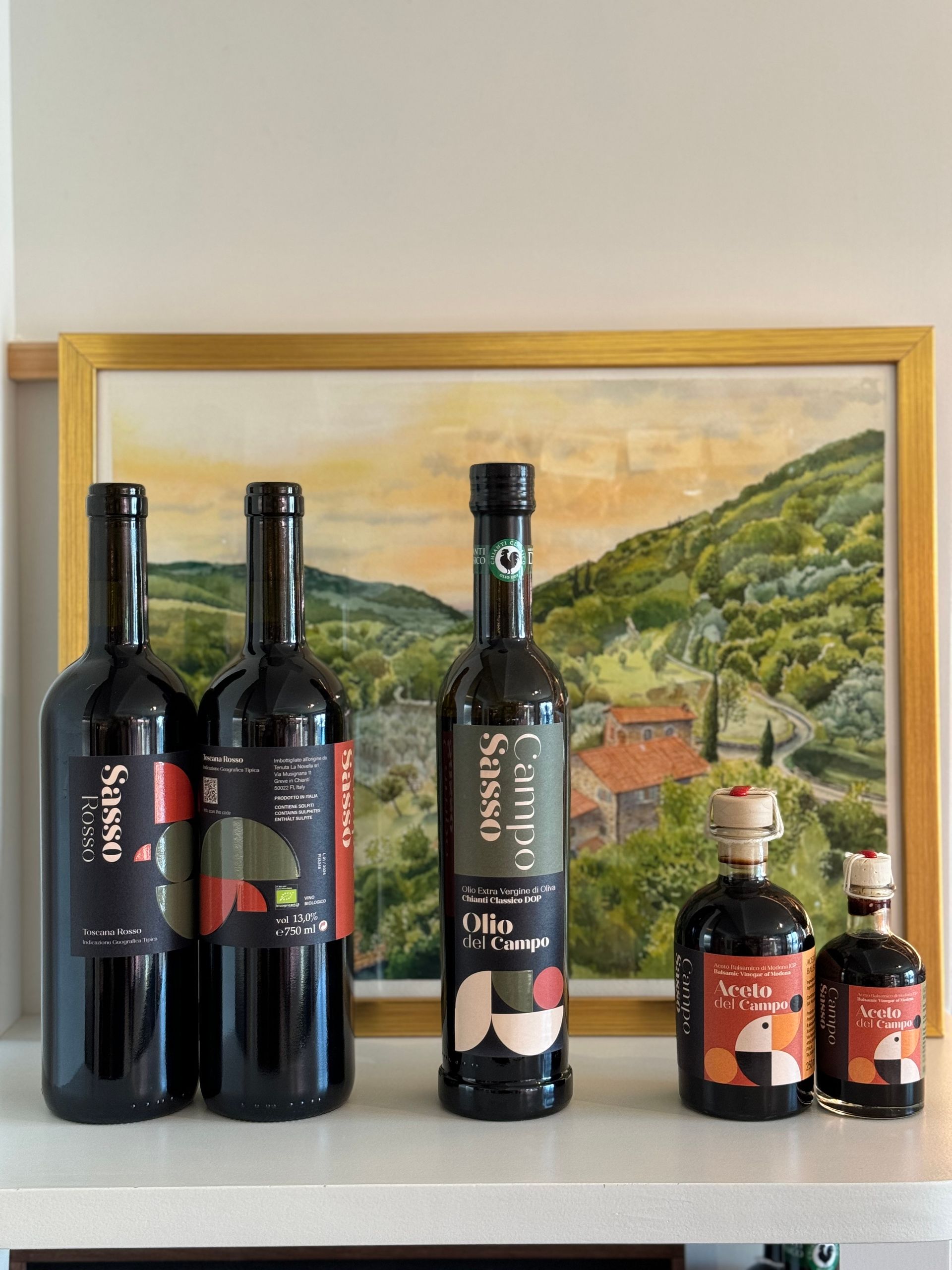
A bottle may display olives, truffles and a Tuscan landscape, encouraging the buyer to imagine that fresh truffles have slowly infused an artisanal extra-virgin olive oil. In practice, many commercial truffle oils rely largely on added flavouring, sometimes without containing any meaningful amount of truffle.
The problem is not only authenticity. It is also that the aggressive flavouring can destroy the sensory value of a good extra-virgin olive oil.
True Tuscan olive oil should express fruit, bitterness, pepper, fresh herbs and the character of its olives. Once saturated with an artificial truffle-like aroma, those qualities disappear. A potentially excellent agricultural product becomes a neutral carrier for a standardised smell.
From both an olive-oil and truffle perspective, it is difficult to imagine a greater waste.
November: The Moment to Buy Real Truffles
For those wishing to understand the finest Tuscan truffles, November remains the essential month.
Two of the most important destinations are San Miniato, between Florence and Pisa, and San Giovanni d’Asso, in the Crete Senesi near Montalcino.
San Miniato hosts its historic White Truffle Market Exhibition over several weekends in November. The event brings together truffle hunters, traders, cooks and local producers and remains one of Tuscany’s most recognised celebrations of Tuber magnatum Pico.
San Giovanni d’Asso holds the White Truffle Market Exhibition of the Crete Senesi, traditionally during the second and third weekends of November. The village is deeply connected with the truffle culture of the clay hills south of Siena and also celebrates the Marzuolo and summer scorzone at other moments of the year.
These markets do not remove every question of origin or quality, but they offer something that a flavoured supermarket product cannot: the possibility to see, smell, compare and discuss individual fresh truffles.
A serious purchase should still involve questions:
- What is the species?
- Where was it collected?
- When was it found?
- Is it fully mature?
- How should it be stored?
And how soon should it be eaten?
The price should reflect the species, quality, maturity, size, condition and scarcity of the season—not merely the generic word tartufo.
Truffle Hunting: Enjoyable, but Not Always the Whole Truth
A truffle hunt can be one of the most enjoyable rural experiences in Tuscany.
Walking through woods with a trained dog, observing its relationship with the hunter and discovering how truffles grow underground can create a genuine connection with the landscape. The dog’s excitement is real, the search can be fascinating, and a knowledgeable tartufaio can explain an extraordinary combination of soil, trees, climate, animal instinct and human experience.
Tuscan law recognises truffle hunting as a regulated activity. Hunters must complete training, pass an examination and obtain the appropriate authorisation.
But the tourism experience does not always tell the full story.
Visitors may not be told precisely which species the dog has found. A modest summer truffle may be presented simply as “the Tuscan truffle.” The place where the hunt occurs may be a cultivated or managed truffle ground rather than an untouched wild forest. The truffle served afterwards may not necessarily be the specimen—or even the species—found during the excursion.
Nor does the theatrical discovery of a truffle prove that every “truffle” product served at lunch derives from fresh truffles. Sauces, cheeses and oils may still contain added aroma.
This does not make all truffle hunts false. It means that, as with wine tourism, the quality of the experience depends on the honesty and knowledge of the host.
A meaningful truffle hunt should explain the botanical and fungal species involved, the difference between wild, controlled and cultivated truffle grounds, the legal harvesting calendar, the role of the dog, the maturity and commercial value of each species, the difference between fresh truffle and added aroma, and the actual origin of the truffles served during the meal.
The best experience is not necessarily the one in which the dog finds the largest truffle. It is the one in which the visitor leaves with a more truthful understanding of the product.
A More Honest Truffle Hunting Experience with Grape Tours
This is the philosophy behind the Special Truffle Hunting Tour organised by Grape Tours.
Rather than presenting truffle hunting as a staged discovery or reducing every species to the generic idea of “Tuscan truffle,” the experience is organised with genuine local professionals who understand the woods, the dogs, the seasons and the commercial reality of the product.
The objective is not simply to find a truffle. It is to help guests understand what has actually been found, which species it belongs to, whether it comes from a wild or managed truffle ground, and how its quality and value relate to the season.
The professionals involved explain the relationship between the truffle, its host trees, the soil and the trained dog. They are also able to address the less romantic but essential questions of traceability, added flavourings and the real origin of the products served afterwards.
The experience remains joyful, convivial and rooted in the Tuscan landscape, but it is also intended to be transparent. Guests are not simply shown a truffle: they are given the knowledge needed to distinguish a genuine seasonal product from the standardised “truffle flavour” encountered so frequently in restaurants and shops.
For Grape Tours, this is what a meaningful truffle experience should offer: not a performance built around luxury, but an encounter with real professionals, local knowledge and the truth of a product that only makes sense through its season, species and place of origin.
Rediscovering the Real Taste of Truffle
The paradox of modern truffle culture is that the aroma has become omnipresent while the real ingredient remains rare.
Truffle fries, truffle cheese, truffle mayonnaise and truffle oil have created a standardised sensory language: powerful, sulphurous, immediate and easily recognisable. For many consumers, this has become the expected taste of truffle.
A fresh Tuscan truffle can seem almost too subtle by comparison.
But real truffle was never meant to taste like a flavouring. Its beauty lies in variation, maturity, fragility and season. It belongs to a living relationship between fungus, tree roots, soil, climate, dogs and human knowledge.
To understand it, we must accept that it cannot be equally available all year, that every species is not interchangeable and that stronger aroma does not necessarily mean better quality.
The finest approach remains the simplest: visit Tuscany during the correct season, meet people who identify the species and origin honestly, buy a fresh truffle in November from a trusted seller, and shave it over a dish that allows it to speak for itself.
No truffle oil. No artificial intensity. No aromatic disguise.
Just the fleeting and imperfect truth of a real Tuscan truffle.
About the author: Pierre Gouttenoire is an agricultural engineer, oenologist and cheese affineur. He co-founded the Jollie ecosystem in Tuscany and oversees its wine, food and regenerative agriculture projects.
Sources:
Regione Toscana, Legge regionale 2 agosto 2023, n. 36 — Norme in materia di cerca, raccolta e coltivazione del tartufo.
Regione Toscana, Cerca e raccolta tartufi.
European Parliament and Council, Regulation (EC) No 1334/2008 on flavourings and certain food ingredients with flavouring properties.
European Commission, EU Rules and Union List of Food Flavourings.
European Food Safety Authority, Scientific Opinion on aliphatic sulphides and thiols used as flavouring substances.