Regenerating Campo Sasso: Hospitality, Affinage and Agroforestry
How Pierre and Rebecca Gouttenoire Brought New Life to a Tuscan Farmstead with Dave and Jenny Marrs (Fixer to Fabulous)
Campo Sasso is a restored Tuscan farmstead in the hills of Chianti Classico, just south of Florence. Regenerated by Pierre and Rebecca Gouttenoire with the collaboration of Dave and Jenny Marrs from Fixer to Fabulous: Italiano, it brings together hospitality, cheese affinage, agroforestry, olive trees, vineyards and local craftsmanship as the physical heart of the Jollie ecosystem.

Nestled in the rolling hills of Chianti Classico, just south of Florence, Campo Sasso is more than a beautifully restored Tuscan villa. It is the physical expression of a vision shared by Pierre and Rebecca Gouttenoire: a project rooted in hospitality, craftsmanship, agriculture, food culture, and the regeneration of a place with deep historical roots.
From traditional colonica to living ecosystem
Purchased in 2022, Campo Sasso was once a traditional colonica—the main farmhouse of a sharecropping estate that had evolved over centuries. While parts of the property had been previously restored, significant portions remained untouched, including former cattle barns, underground cellars, and agricultural spaces that no longer served their original purpose. Pierre and Rebecca saw an opportunity not simply to renovate a building, but to reimagine an entire ecosystem.
The Fixer to Fabulous: Italiano renovation
The project took on an unexpected dimension when longtime friends Dave and Jenny Marrs, stars of HGTV’s Fixer to Fabulous, became involved. Their friendship dated back nearly fifteen years, beginning when the Marrs family joined one of Rebecca’s wine tours in Tuscany. Over the years, visits turned into a close friendship built around a shared appreciation for family, hospitality, craftsmanship, and meaningful places. During a dinner at Campo Sasso shortly after the purchase of the property, the idea emerged: what if the transformation of this forgotten Tuscan farmhouse became the setting for an entirely new chapter of the Fixer to Fabulous story?
What followed became Fixer to Fabulous: Italiano, a six-episode series documenting one of the most ambitious projects Dave and Jenny Marrs had ever undertaken. Working across continents, navigating Italian regulations, preservation requirements, language barriers, and complex logistics, the team embarked on a restoration that sought to preserve the soul of the building while adapting it to a new purpose.
For Pierre and Rebecca, however, the true objective extended far beyond architecture.
Campo Sasso was conceived as a living demonstration of their broader philosophy. Pierre, an agronomist, oenologist, and descendant of generations of Roquefort cheese affineurs, envisioned a place where wine, olive oil, cheese, agriculture, and hospitality could coexist in a single narrative. Rebecca brought decades of experience introducing international travellers to Tuscany through Grape Tours, helping visitors discover the region through personal encounters rather than tourist attractions. Together, they sought to create a destination that celebrated authentic Tuscany while remaining firmly connected to contemporary life.
A cheese-aging cellar inspired by Roquefort
One of the most symbolic elements of the regeneration was the creation of Campo Sasso’s cheese-aging cellar. Hidden beneath the house, the former storage space was transformed into a state-of-the-art affinage facility inspired by the natural caves of Roquefort. Temperature and humidity-controlled maturation rooms now allow cheeses to age slowly while visitors can experience tastings that connect Tuscany with Pierre’s French heritage. The cellar has become one of the defining features of the property and a tangible expression of the family’s belief that tradition should not be preserved behind glass but actively practiced and reinvented.
Local craftsmanship and Tuscan materials
The restoration also emphasized local craftsmanship at every stage. Tuscan artisans produced custom doors, windows, ironwork, furniture, stonework, and finishing details. Historic elements were preserved wherever possible, while new interventions respected the character of the original structure. The goal was never to create a luxury villa detached from its surroundings, but rather a home deeply rooted in the landscape and culture that shaped it.
The physical heart of the Jollie ecosystem
Today, Campo Sasso serves multiple purposes. It is a guest house welcoming travelers from around the world. It is a showcase for regenerative agriculture, with olive groves, fruit trees, vineyards, and biodiversity sharing the same landscape. It is a center for cheese maturation and food education. Most importantly, it is the physical heart of the Jollie ecosystem, which also includes Grape Tours and Formaggioteca Terroir in Florence.
What makes Campo Sasso remarkable is that it is not a story of restoration alone. It is a story of regeneration.
Rather than freezing Tuscany in an idealized past, Pierre and Rebecca have sought to demonstrate that authenticity can evolve. Historic buildings can gain new life. Traditional skills can inspire innovation. Agriculture can become more diverse and resilient. Hospitality can create meaningful connections between people, places, and cultures.
In many ways, Campo Sasso represents a new model for rural Tuscany: one where heritage is not simply preserved, but continuously renewed for future generations. And thanks to the collaboration between Pierre and Rebecca Gouttenoire and Dave and Jenny Marrs, that story has reached audiences around the world—inviting visitors not only to admire Tuscany, but to participate in its ongoing regeneration.
Read our articles:
about Campo Sasso caves bâtardes
Press, Media, Awards & Recognition about Campo Sasso
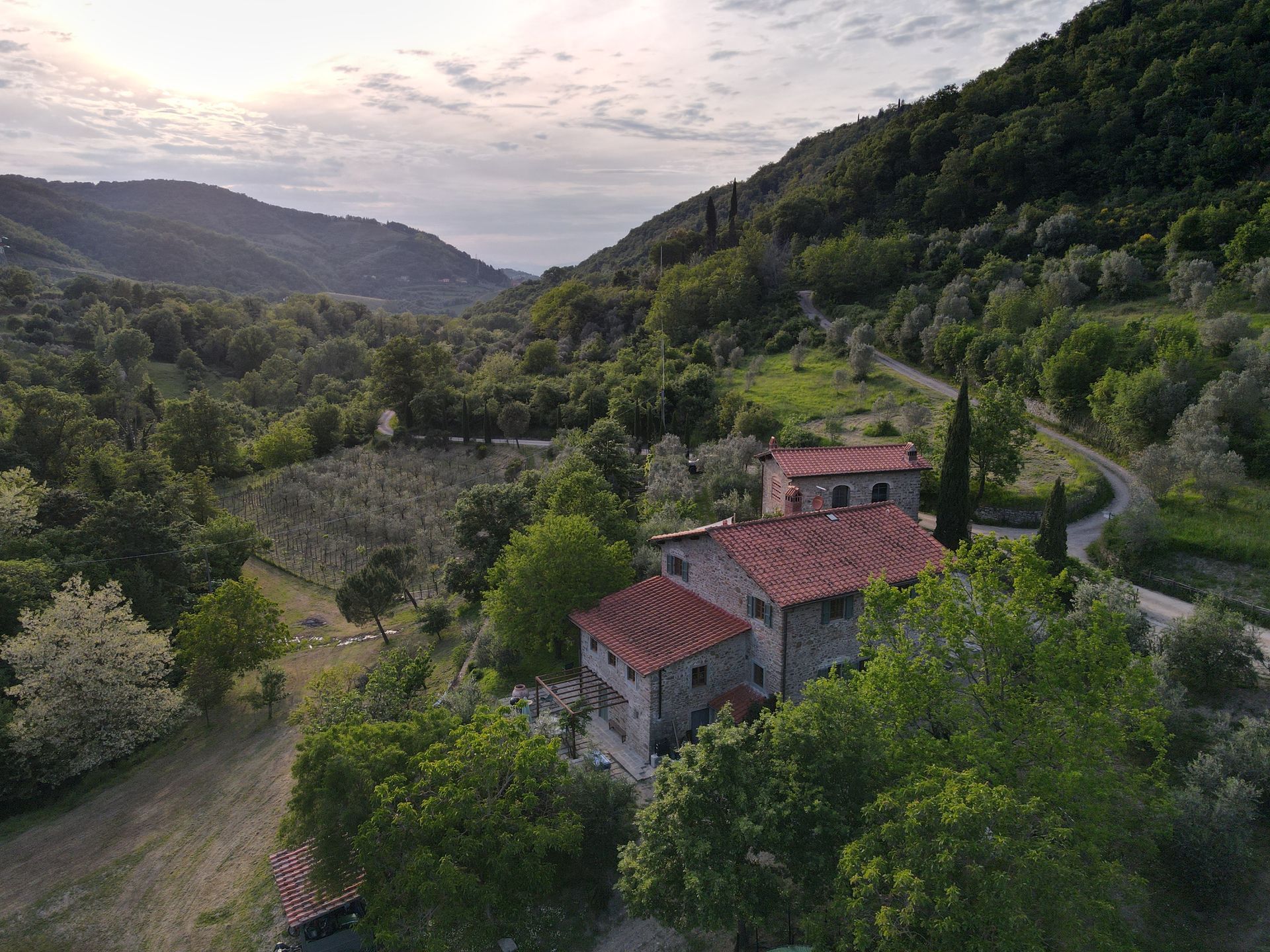
Campo Sasso is where the Jollie vision becomes tangible. Through its restored farmhouse, cheese-aging cellars, olive groves, agroforestry vineyard and hospitality experiences, it shows how heritage can be actively renewed rather than simply preserved. It connects the work of Grape Tours, Formaggioteca Terroir and the broader Regenerative Tuscany project into one living place.
Campo Sasso can be experienced as a private Tuscan villa stay, a place for cheese and wine tastings, and a living gateway into the wider Jollie ecosystem.
Press Articles about Fixer to Fabulous Italiano & Campo Sasso
Featured in
- House Beautiful — Campo Sasso renovation, cheese-aging caves and Tuscan hospitality.
- Realtor.com — Feature on the Fixer to Fabulous: Italiano project.
- Dave & Jenny Marrs — Official story of the Italian renovation project.