The Art of French Cheese Affinage in Tuscany: The Story of Campo Sasso's Signature Cheeses
For centuries, French cheesemakers have understood a simple truth: a cheese is not finished when it leaves the dairy. It is only beginning its journey.
Affinage—the art of maturation—is the process through which a young cheese develops its texture, aromas, rind and personality. While the cheesemaker creates the cheese, it is often the affineur who reveals its full potential. Temperature, humidity, airflow, salt, native microflora and time become the tools through which a cheese gradually expresses itself.
This philosophy has been embodied for generations by the great French affineurs, among whom Hervé and Laurent Mons have become internationally recognized references. Their approach to cheese maturation has inspired countless cheesemakers and affineurs around the world, including Pierre Gouttenoire.
For Pierre, this connection is both professional and deeply personal. It is rooted in a family relationship that stretches back more than forty years. His uncle, Paul Gardère, a respected cheese merchant based in Saint-Étienne, worked closely with the parents of Hervé and Laurent Mons long before the Mons family became one of the most respected names in French cheese maturation.
Over the years, Pierre had the opportunity to learn the fundamental principles of affinage through the teachings, guidance and generous support of Hervé and Laurent Mons. Beyond technical knowledge, they transmitted a philosophy: that the role of the affineur is not to transform a cheese into something else, but to help it become the finest version of itself.
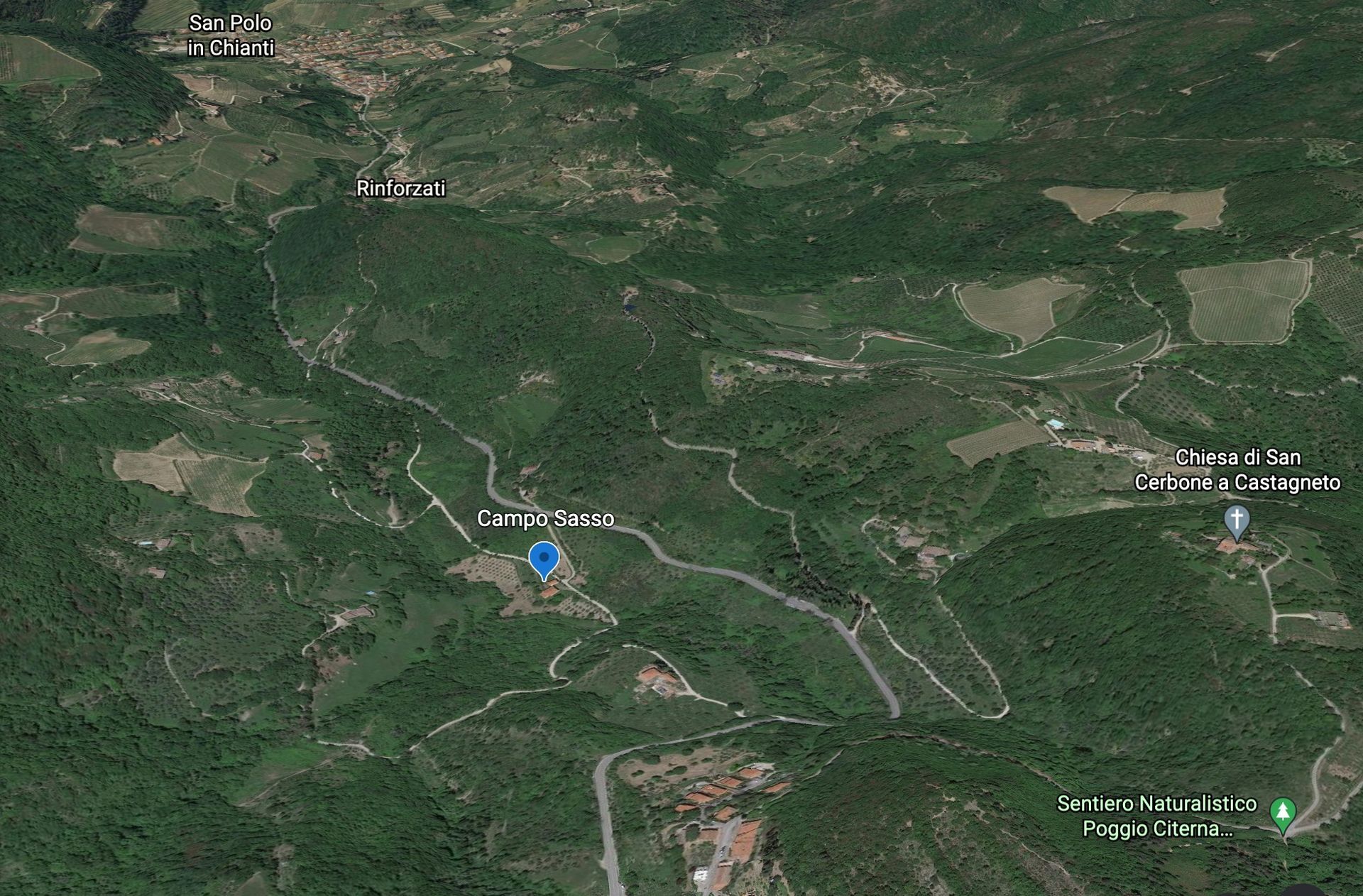
Today, this philosophy lives on in the cellars of Campo Sasso, where French maturation principles meet Tuscan milk, Tuscan landscapes and Tuscan producers.
The Caves Bâtardes of Campo Sasso
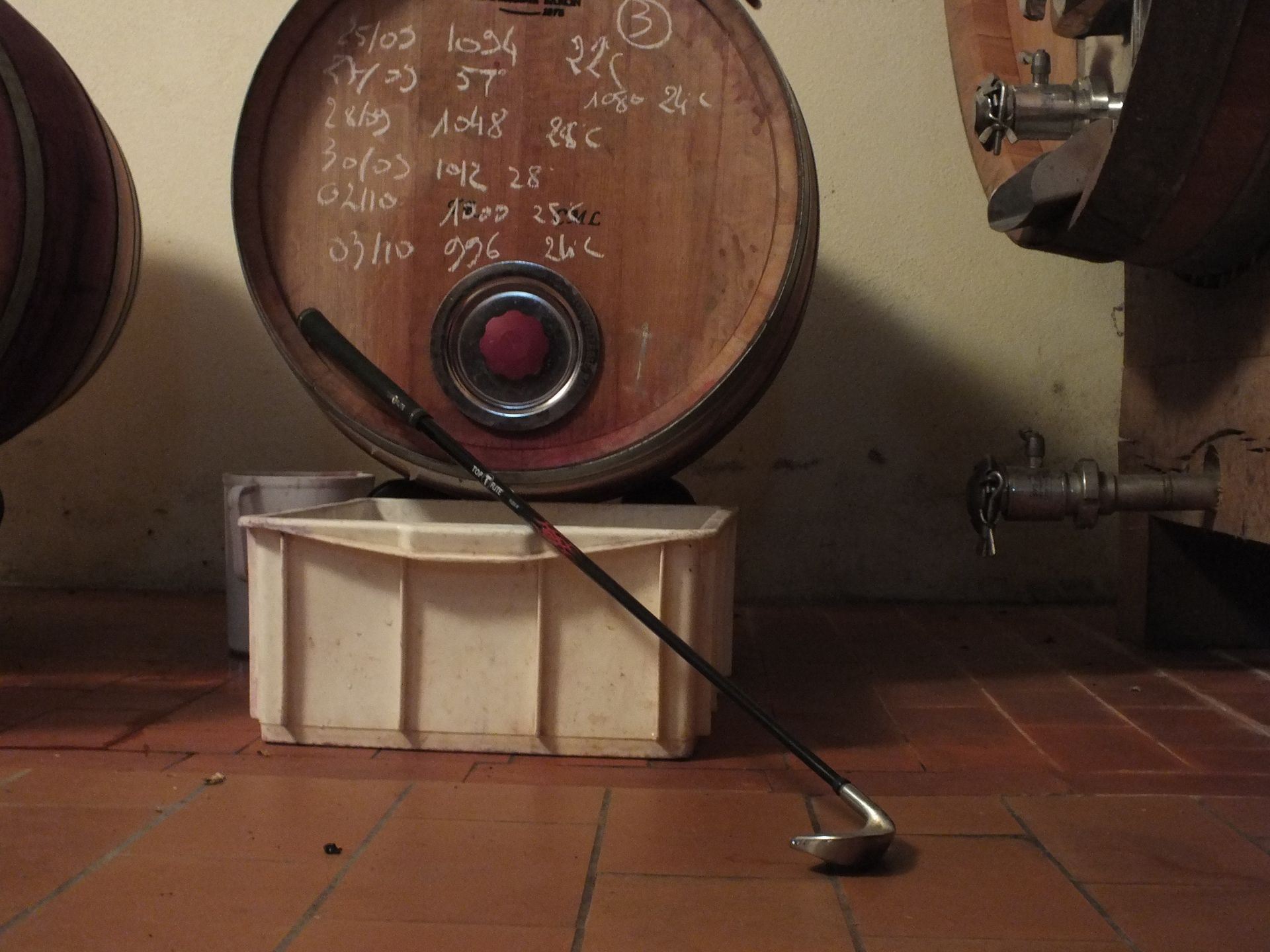
At Campo Sasso, cheese maturation takes place in what Pierre likes to call "caves bâtardes".
The name is a tribute to the historic natural caves once found beneath the Larzac plateau in southern France. For generations, these caves were used to mature sheep's milk cheeses before the development of the modern Roquefort appellation. Many disappeared during the twentieth century as production became increasingly centralized.
The caves of Campo Sasso are not a reproduction of those ancient spaces. Instead, they seek to revive their spirit: creating a living environment where cheeses evolve naturally through the interaction of temperature, humidity and native microflora.
Within these cellars, each cheese follows its own path.
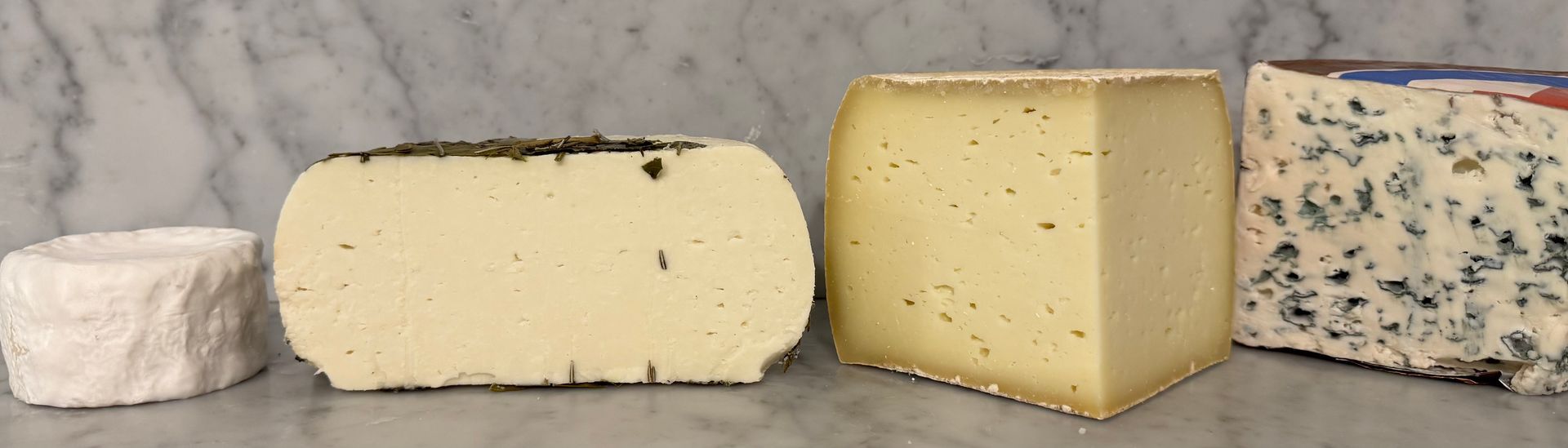
The four signature cheeses of Campo Sasso illustrate four different approaches to the art of affinage.
Il Sassolino: The Art of Surface Ripening
One of the most emblematic French maturation techniques involves the development of a living white rind through the action of Geotrichum candidum and Penicillium camemberti.
These microorganisms gradually transform the cheese from the outside toward the center, softening the paste and creating the creamy textures associated with some of Europe's most celebrated cheeses.
Il Sassolino begins its life in the dairy of Gianfranco Messina, located only twenty minutes from Campo Sasso. Produced from raw sheep's milk, the young cheeses are collected just three days after production.
Once transferred to Campo Sasso, they spend approximately two weeks in the maturation cellar. During this period, Geotrichum and Penicillium camemberti develop a delicate white rind while enzymes progressively soften the interior.
The result is a small sheep's milk cheese with a snowy white appearance, a supple and creamy texture, and aromas of fresh cream, butter, mushrooms and sweet milk. It is a Tuscan interpretation of a classic French surface-ripened cheese, shaped by local milk and local conditions.
Sasso Aromatico: Capturing the Landscape
Another traditional approach to affinage consists of associating cheese with herbs, plants, oils or leaves. The objective is not to mask the cheese but to create a dialogue between the product and its environment.
Sasso Aromatico also begins as a sheep's milk cheese crafted by Gianfranco Messina, weighing approximately 1.2 kilograms.
At Campo Sasso, the cheese undergoes a six-month maturation process using aromatic herbs cultivated on the estate together with Olio del Campo, the estate's extra virgin olive oil.
The maturation takes place under vacuum, allowing the aromatic compounds to slowly integrate into the cheese while preserving remarkable freshness and tenderness.
The result is a cheese that reflects the scents of the Tuscan countryside: wild herbs, Mediterranean vegetation and olive groves. Rather than simply flavoring a cheese, this process seeks to capture a landscape.
Poggio Citerna: The Influence of Salt, Time and Microflora
Named after the hill overlooking Campo Sasso, Poggio Citerna represents a more traditional expression of aged pecorino.
Produced by Gianfranco Messina as a wheel of approximately three kilograms, the cheese is then matured in the caves of Campo Sasso for four to six months.
Particular attention is given to the management of humidity and to the interaction between the cheese and the exceptionally pure rock salt of Volterra. Unlike sea salt, Volterra salt is extracted from ancient underground geological deposits formed millions of years ago and is renowned throughout Italy for its purity.
During maturation, the natural microflora of the caves gradually colonizes the rind and participates in the evolution of the cheese.
Rather than becoming excessively dry or aggressive, the cheese develops remarkable balance. The paste retains suppleness while gaining depth, complexity and freshness.
The result is a pecorino whose character is shaped not only by the cheesemaker, but also by the cellar itself.
Sasso Forte: Reconnecting Tuscany and Roquefort
Among all the cheeses matured at Campo Sasso, Sasso Forte perhaps best illustrates the historical connection between Pierre's family heritage and the world of French affinage.
Created in partnership with Alexandre and Emilie Vialettes of Ferme d'Alcas, located near Roquefort-sur-Soulzon, Sasso Forte is a raw sheep's milk blue cheese inspired by the ancient traditions of the Larzac region.
The curd is cut entirely by hand and gently ladled into moulds to preserve its delicate structure. After salting, Penicillium roqueforti develops naturally within the cheese at Alcas.
The young cheeses are then transferred to Campo Sasso where the final stages of maturation take place.
Within the caves bâtardes, the cheeses continue to evolve until they reach the crucial stage known as revirage, a traditional operation performed by Pierre Gouttenoire. This intervention helps ensure optimal moisture distribution and allows the blue veins, texture and aromas to reach their ideal balance.
Only then is each wheel wrapped in its distinctive gold paper before being offered at Formaggioteca Terroir.
Sasso Forte is not intended to reproduce Roquefort. Instead, it seeks to create a bridge between two landscapes, two cultures and two traditions of sheep's milk cheesemaking.
Affinage as a Living Heritage
At Campo Sasso, affinage is more than a technical process.
It is a way of preserving and regenerating knowledge.
It creates connections between producers and affineurs, between France and Tuscany, between traditional techniques and contemporary tastes.
Every cheese begins with the expertise of an artisan producer. Through maturation, it acquires a second story—one written by time, by the cellar and by the hands of the affineur.
In this sense, cheese affinage is not simply the final stage of cheesemaking.
It is the moment when a cheese truly finds its voice.
Taste Our Cheeses and Visit the Campo Sasso Cellars:
- To taste our cheese in Florence
- To taste our cheese at Campo Sasso
- To stay at Campo Sasso and get a private visit and cheese tasting with Pierre
About the author: Pierre Gouttenoire is an agricultural engineer, oenologist and cheese affineur. He co-founded the Jollie ecosystem in Tuscany and oversees its wine, food and regenerative agriculture projects.