The Makers of Tuscany: The People Who Shaped Chianti Classico
In Brief
Chianti Classico was not shaped by soil alone. From the Etruscans and medieval monks to aristocrats, sharecroppers, Bettino Ricasoli and today’s winegrowers, discover the people and turning points that built its identity—and why protecting this heritage now means regenerating the land, culture and communities behind it.
The Makers of Tuscany: The People Who Shaped Chianti Classico
From Etruscan traders and medieval monks to sharecroppers, statesmen and modern winegrowers, Chianti Classico was never created by soil alone.
When we look at Chianti Classico today, its landscape can seem almost eternal.
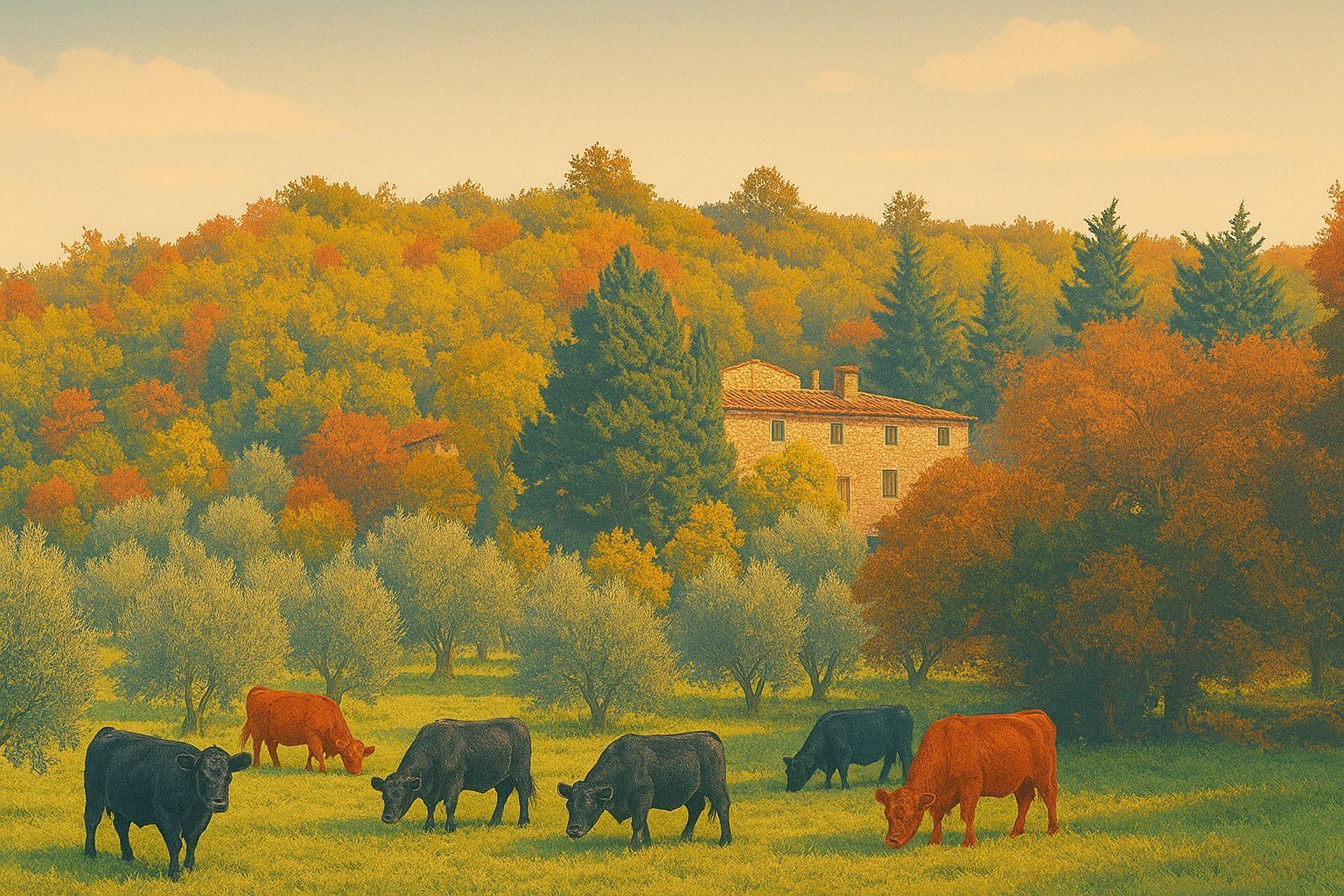
Vineyards follow the hills. Olive trees surround stone farmhouses. Cypress-lined roads lead towards abbeys, castles and Renaissance villas. Everything appears so harmonious that we might believe this landscape emerged naturally—or has always existed in its present form.
But Tuscany did not make itself.
Its land was cleared, planted, defended, divided, cultivated, abandoned and rebuilt by generations of people. Monks organised agricultural estates. Noble families controlled and invested in the countryside. Soldiers defended the frontier between Florence and Siena. Sharecroppers maintained a complex system of mixed farming. Merchants carried Tuscan wine abroad. Politicians established boundaries and rules, while later producers challenged those same rules in pursuit of quality.
The history of Chianti Classico is therefore not simply the history of a wine.
It is the history of the people who made a territory.
Before Chianti: Etruscans and Romans
Eighth century BC–fifth century AD
Viticulture in Tuscany began long before the name Chianti appeared.
The Etruscans cultivated vines and traded wine across the Mediterranean. Archaeological finds show that wine was connected not only to agriculture, but also to hospitality, social status, religious rituals and the culture of the banquet.
The Romans later expanded viticulture and developed roads, rural estates and commercial networks capable of carrying wine over greater distances.
Neither civilisation produced Chianti Classico as we know it today. Their contribution was more fundamental: they established viticulture as part of Tuscan agriculture, culture and exchange.
The wine was already present. The territory called Chianti had yet to be constructed.
Monks, Castles and the Medieval Countryside
Eleventh–fourteenth centuries
After the fragmentation of the Roman world, monasteries played an essential role in reorganising land, preserving documents and maintaining agricultural knowledge.
Badia a Coltibuono, founded in 1051, is one of the clearest surviving expressions of this monastic presence. For centuries, its Vallombrosan monks managed forests, fields, olive groves and vineyards in the hills around Gaiole.
Nearby Meleto emerged from the same medieval world. Its origins can be traced to the eleventh century, while its first written mention dates from 1256. Originally connected to monastic ownership, it later became a fortified residence controlled by feudal and aristocratic families.
This transition reflected a wider transformation of the region.
Chianti stood between Florence and Siena, two powerful and frequently hostile republics. The castles now admired for their architecture were once strategic strongholds protecting roads, farms, political boundaries and harvests. Brolio and Meleto were not built as romantic country residences, but as instruments of territorial control.
In 1384, the Black Rooster was chosen as the emblem of the League of Chianti, the political and military organisation created by Florence to administer the territories of Radda, Gaiole and Castellina.
Only fourteen years later, in 1398, a notarial document used the name Chianti to identify wine produced in the area.
Chianti was no longer only the name of a territory. It was becoming the name of a wine.
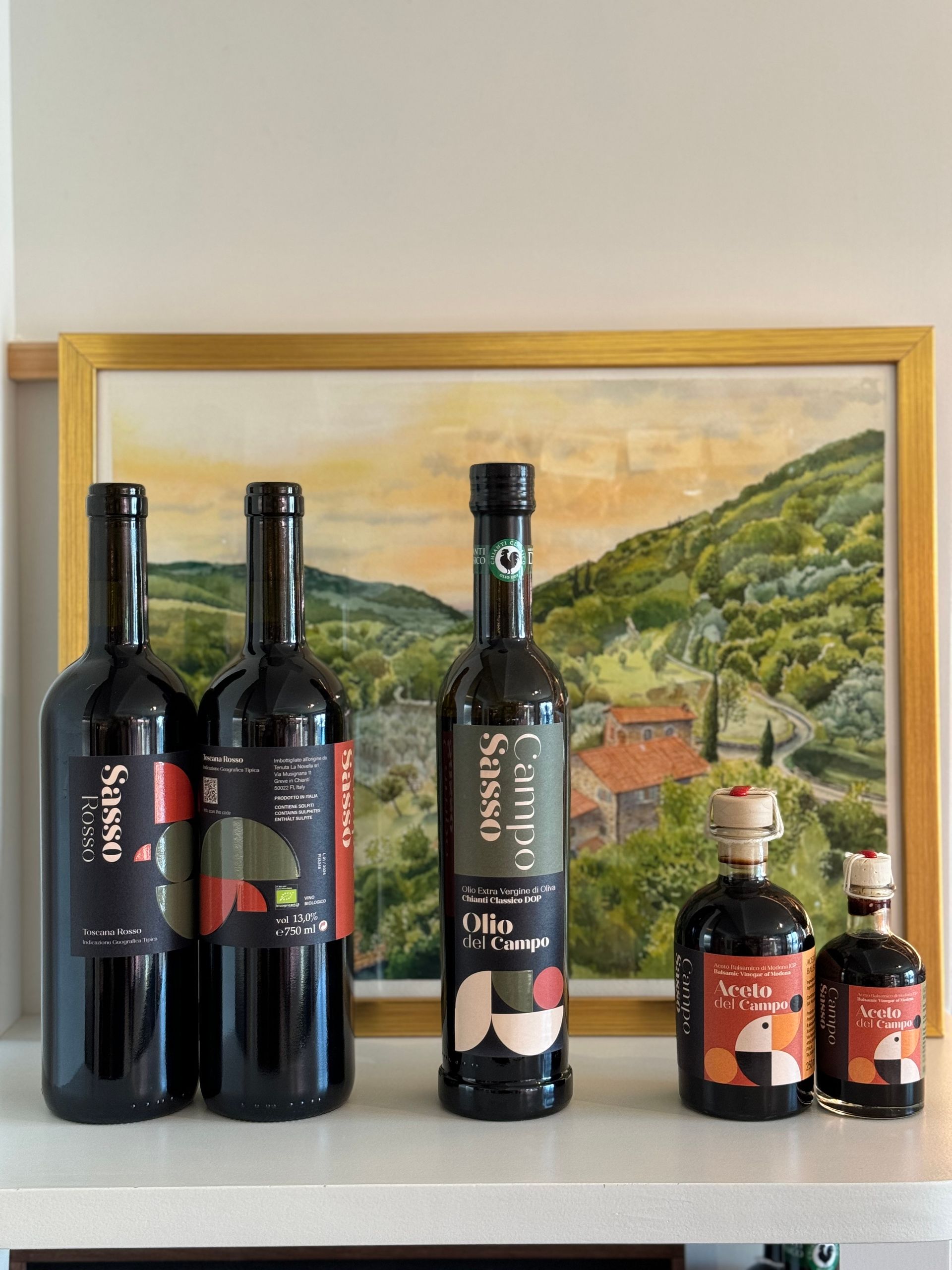
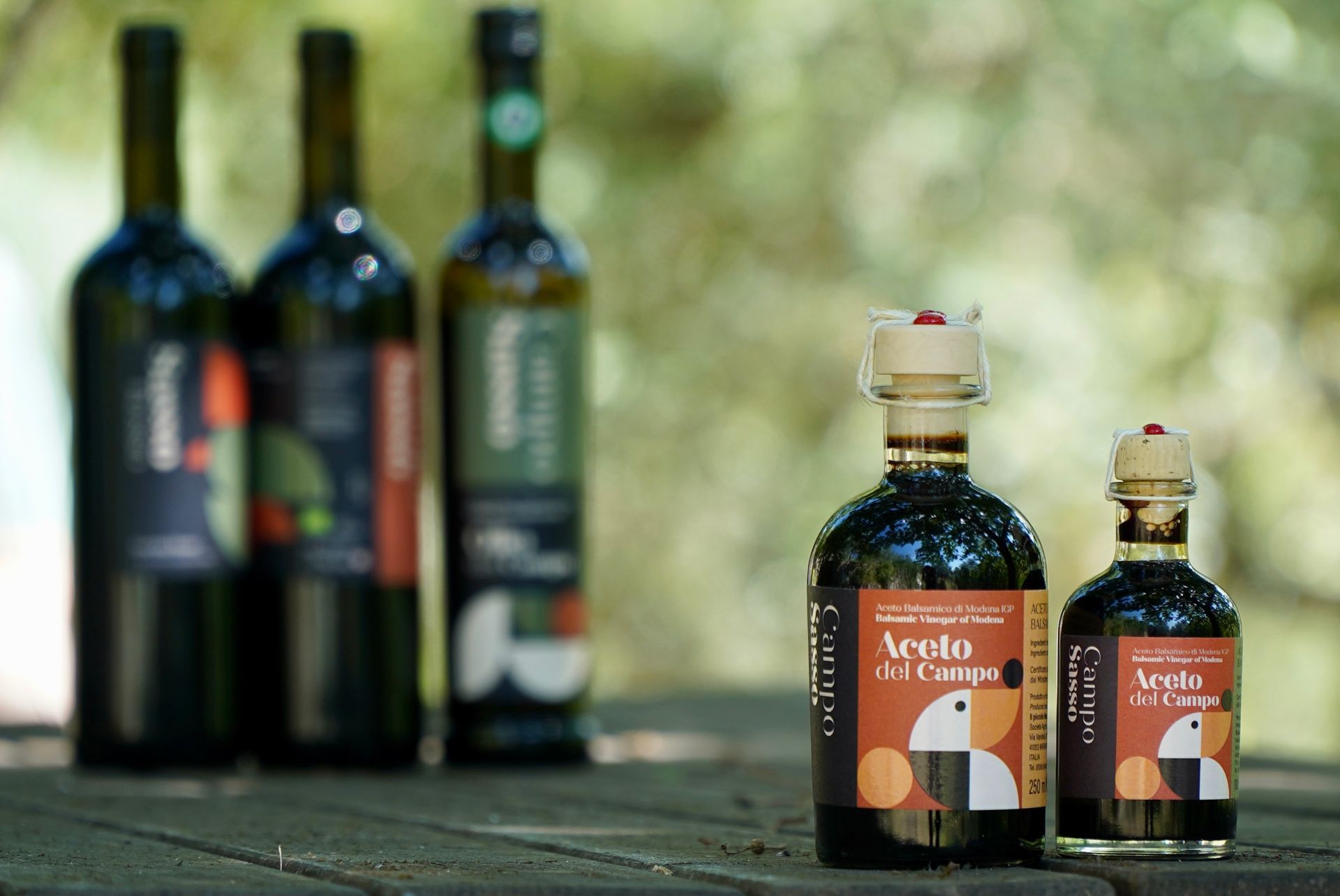
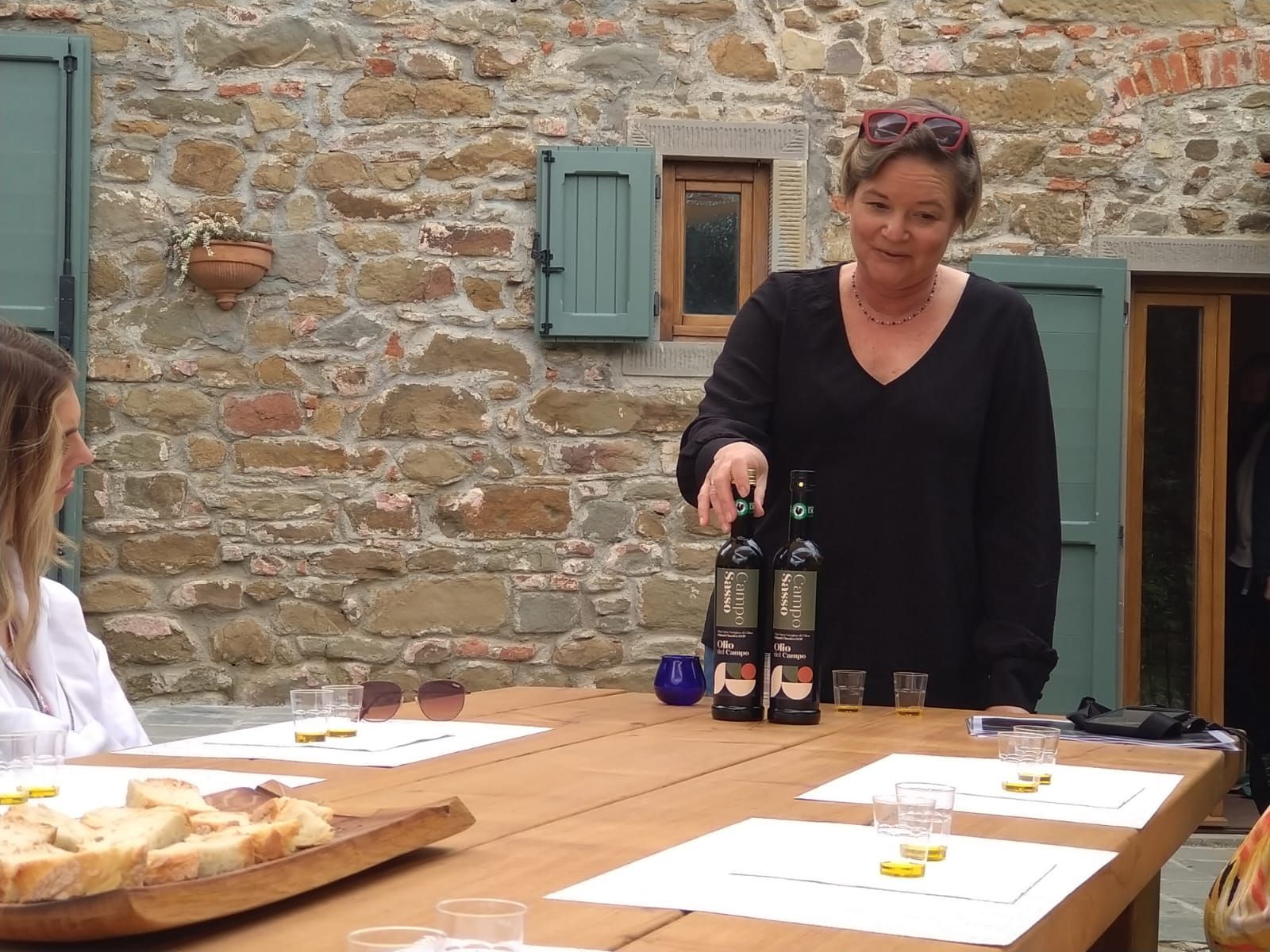
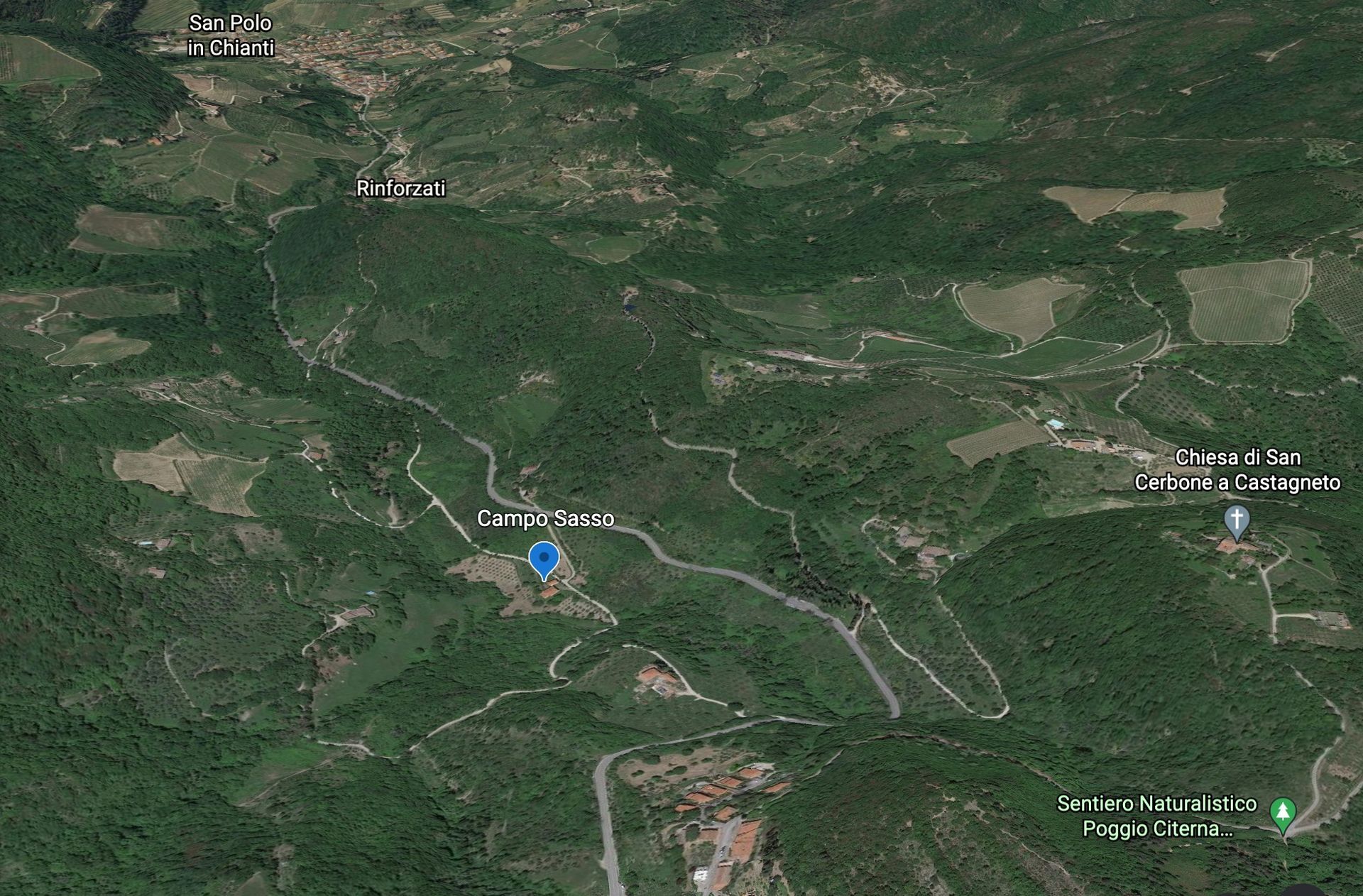
Campo Sasso offers a more personal example of this same rural organisation. Long before becoming part of the Jollie ecosystem, the podere belonged to the extensive agricultural property administered from the convent of San Bartolomeo a Musignana, founded in the thirteenth century on the hill where Tenuta La Novella stands today. Campo Sasso was therefore not an isolated farmhouse, but one working unit within a much larger monastic estate. Its role was connected particularly to cattle and livestock, illustrating how monasteries organised the countryside through complementary farms, each contributing to the economic life of the whole property.
Sharecroppers and Landowners: The Making of the Landscape
Sixteenth–eighteenth centuries
As the conflict between Florence and Siena subsided, many castles gradually lost their military purpose. Fortresses became villas, residences and agricultural estates.
The countryside increasingly developed around the fattoria: a central estate controlling several individual farms or poderi. Much of the work was organised through mezzadria, the Tuscan sharecropping system.
Landowners provided land, buildings and part of the necessary capital. Sharecropping families contributed their labour and divided the agricultural production with the owner.
The system was unequal and demanding. Yet it also created much of the mixed landscape that later came to symbolise Tuscany.
A Tuscan podere was not normally a specialised vineyard. Vines grew alongside olive and fruit trees, cereals, vegetables, pasture and woodland. Families raised chickens, pigs and cattle. Wine was one element within a larger agricultural system designed to support both the family and the estate.
This is why the history of Tuscan wine cannot be separated from bread, olive oil, livestock, forests and family labour.
The landscape was not created for tourism. It emerged from necessity, survival and the accumulated work of generations whose names rarely appear in historical records or on wine labels.
These families were among the most important makers of Tuscany.
1716: The Medici Protect the Name
By the early eighteenth century, Chianti wine had acquired a reputation beyond Tuscany. Its commercial success also encouraged wines from elsewhere to be sold under the increasingly valuable Chianti name.
On 24 September 1716, Grand Duke Cosimo III de’ Medici issued a proclamation defining the production boundaries of four Tuscan wine areas: Chianti, Carmignano, Pomino and Valdarno di Sopra.
For Chianti, the decree identified a territory centred on Radda, Gaiole and Castellina, broadly corresponding to the historical heartland between Florence and Siena. Additional measures addressed production, shipping, commerce and fraud.
This was not yet an appellation in the modern European sense, but it established a remarkably early legal relationship between a wine and its geographical origin.
The soil did not change in 1716. What changed was the recognition that origin had value—and therefore required protection.
Bettino Ricasoli and the Modern Idea of Chianti
1809–1880
The nineteenth century introduced another kind of maker: the agricultural reformer and statesman.
Bettino Ricasoli, known as the Iron Baron, belonged to the family associated with Brolio since the twelfth century. He played a major role in the Risorgimento and served twice as prime minister of the newly unified Kingdom of Italy.
At Brolio, he also conducted experiments with grape varieties, cultivation and blending.
In an 1872 letter to Professor Cesare Studiati of the University of Pisa, Ricasoli explained that Sangiovese provided the wine’s principal aroma and strength, while Canaiolo softened its harder character. Malvasia Bianca could make a wine lighter and more suitable for early consumption but was unnecessary for wines intended to age.
This became known as the “Chianti formula”.
Its importance lies less in establishing a definitive recipe than in the method behind it. Ricasoli approached wine through observation and experimentation, seeking to understand how grape varieties could create balance, identity and longevity.
At Brolio, wine became part of a broader project of agricultural modernisation and Italian nation-building.
Protection, Crisis and Reinvention
1924–1996
On 14 May 1924, thirty-three producers met in Radda and founded Italy’s first consortium created specifically to protect a wine and its place of origin. They adopted the medieval Black Rooster as their symbol.
In 1932, the word Classico was officially introduced to distinguish the original historical area from the wider territories authorised to produce Chianti.
But the twentieth century also brought phylloxera, war and profound social change. In the summer of 1944, Chianti once again became a battlefield. The severe winter of 1956 then devastated vineyards and olive groves across central Italy.
At the same time, industrialisation accelerated the abandonment of the countryside. Sharecropping families left isolated farms in search of wages, education and modern housing. Mezzadria was progressively abolished during the 1960s, although its disappearance continued into the following decade.
Farmhouses were abandoned, fields returned to woodland and traditional knowledge was lost. The landscape admired today was, for a time, at risk of disappearing.
The modern revival of Chianti Classico came through both regulation and experimentation. Chianti received DOC status in 1967 and DOCG recognition in 1984. Producers simultaneously reduced yields, replanted vineyards, improved cellar practices and reconsidered grape varieties and blending.
In 1996, Chianti Classico finally became an autonomous DOCG, legally distinct from Chianti, and wines made from 100% Sangiovese were authorised. White grapes were excluded from the 2006 vintage, Gran Selezione was introduced in 2014, and eleven Additional Geographical Units were adopted in 2021 to recognise the territory’s internal diversity.
This evolution reminds us that tradition does not mean immobility. Chianti Classico has survived because every generation has questioned what should be protected, what could be improved and what needed to change.
The Next Makers of Tuscany
The makers of Tuscany are not only the historical figures whose portraits hang inside castles.
They are also the unnamed agricultural families who maintained terraces, vines, olive trees, livestock and farmhouses over generations. Today, the story continues through winegrowers, agricultural workers, artisans, researchers, cheesemakers, cooks and hospitality professionals.
Their responsibility is no longer simply to produce prestigious wine. It is to maintain a living territory.
Climate change, water scarcity, soil erosion, biodiversity loss, rising land values and the conversion of working landscapes into decorative or purely touristic spaces all threaten the relationship between wine and place.
A vineyard may look beautiful while supporting very little ecological life. A historic estate may survive architecturally while losing its agricultural purpose. A famous territorial name may increase in value while becoming less accessible to those who work there.
The next makers of Tuscany will therefore be judged not only by the quality of their wines, but also by the condition of the land, knowledge and communities they pass on.
From Heritage to Regenerative Tuscany
The history of Chianti Classico teaches us that authenticity has never meant freezing Tuscany in time.
Regeneration does not mean recreating an idealised rural past. Mezzadria produced much of the landscape we admire, but it was also an unequal social system. What deserves to be recovered is not its hierarchy, but the intelligence of its agricultural connections: vines growing alongside olive trees, fruit trees, cereals, livestock, forests and human communities.
Modern specialisation has often separated what Tuscan agriculture once held together. Wine became disconnected from food, vineyards from trees and livestock, hospitality from agriculture, and tourism from the realities of rural life.
Regeneration begins by reconnecting these elements.
This is the vision Jollie calls Regenerative Tuscany: bringing wine, food, agriculture, hospitality, craftsmanship and education back into one living ecosystem.
Through Grape Tours, wine becomes an entry point into Tuscany’s history, landscapes and producer communities. Formaggioteca Terroir reconnects artisan cheese with livestock, pasture and human knowledge. Campo Sasso revives coltura promiscua through vines, olive trees, fruit trees, animals and agroforestry. At Tracolle, the ambition is to bring agriculture, livestock, forestry, olive growing, food and hospitality together within a farm-to-table ecosystem.
These projects express one conviction: Tuscany should not be preserved behind glass or reduced to a beautiful background for visitors.
It must remain cultivated, inhabited, understood and renewed.
About the author: Pierre Gouttenoire is an agricultural engineer, oenologist and cheese affineur. He co-founded the Jollie ecosystem in Tuscany and oversees its wine, food and regenerative agriculture projects.