Olive Oil: A Mediterranean Fruit Transformed by Human Knowledge
In Brief
Olive oil is one of the great cultural products of the Mediterranean, but it does not exist without human knowledge and intervention. From the harvesting of the olives to crushing, malaxation and centrifugation in modern Tuscan frantoi, every stage influences its quality. This article explains why “first cold pressed” is often an outdated marketing cliché, how origin and freshness matter more than romantic labels, and why consumers should choose traceable extra-virgin olive oil from the latest harvest, stored in a small, well-sealed bottle. It concludes with Olio del Campo, produced in partnership with Pruneti in the Val d’Ema, where Campo Sasso and its olive trees are located.
Keywords: olive oil, extra-virgin olive oil, Tuscan olive oil, Mediterranean culture, olive oil extraction, modern frantoio, cold extraction, first cold pressed, olive oil fraud, olive oil origin, harvest year, Chianti Classico olive oil, Val d’Ema, Campo Sasso, Pruneti, Olio del Campo
Olive Oil: A Mediterranean Fruit Transformed by Human Knowledge
Olive oil is often presented as the most natural expression of the Mediterranean landscape: olives growing beneath the Tuscan sun, harvested from ancient trees and simply “pressed” to release their oil.
The reality is both more complex and more interesting.
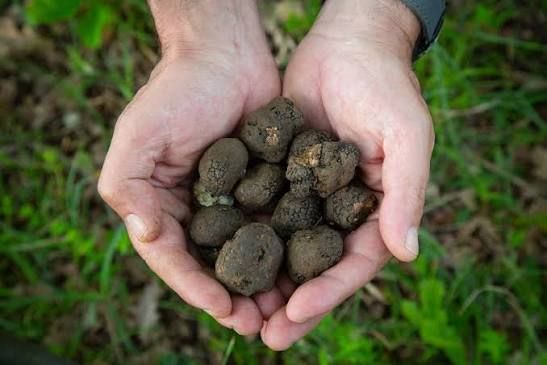
Like wine and cheese, olive oil does not exist without human intervention. An olive hanging from a tree is not olive oil. It is a firm, bitter fruit containing water, solids and microscopic droplets of fat trapped within its cells. To extract the oil, humans must harvest the fruit, break its structure, manage the resulting paste and physically separate its different components.
Olive oil is therefore not merely a product of nature. It is the result of nature interpreted and transformed through human knowledge.
From the Eastern Mediterranean to a Shared Culture
The cultivation of the olive tree began thousands of years ago in the eastern Mediterranean before spreading through migration, commerce and the expansion of Mediterranean civilisations.
Phoenicians, Greeks, Etruscans and Romans all contributed to the development of olive cultivation and oil production. Over time, the olive tree became deeply embedded in the landscapes, economies and cultures of the Mediterranean basin.
Olive oil was never limited to cooking. It was used as food, fuel, medicine, cosmetic treatment, religious offering and trading commodity. It illuminated homes and temples, preserved certain foods, treated the body and became a symbol of peace, prosperity and continuity.
Few agricultural products have acquired such a powerful cultural meaning.
The olive tree itself reflects this continuity. It grows slowly, survives difficult soils and dry climates, and can remain productive for generations. An olive grove is rarely the creation of one person alone. It is often inherited, maintained and reshaped over centuries.
Yet the longevity of the tree should not lead us to romanticise the production of its oil. Olives do not release high-quality oil spontaneously. The transformation has always required tools, energy, timing and technical judgement.
Without Human Intervention, There Is No Olive Oil
Historically, olives were crushed beneath large millstones. The resulting paste was spread onto circular fibre mats, stacked and subjected to strong mechanical or hydraulic pressure.
This pressure forced a mixture of oil and vegetation water out of the paste. The oil then had to be separated from the water, initially by settling and later through more efficient mechanical systems.
The principle was simple: the fruit had to be broken, and significant physical force had to be applied to recover the oil contained inside it.
For centuries, the quality of olive oil depended on the cleanliness of the equipment, the condition of the olives, the speed of processing and the producer’s ability to separate the oil without damaging it.
Many of these principles remain valid today. The machinery, however, has completely changed.
What Happens Inside a Modern Tuscan Frantoio?
In most modern Tuscan olive mills, or frantoi, olives are no longer pressed between mats. Contemporary extraction is generally based on washing, crushing, malaxation and centrifugation.
The process begins as soon as possible after harvesting. Speed is essential because olives are living fruits. Once picked, they begin to deteriorate through oxidation, fermentation and microbial activity, particularly when stored in large piles or closed containers.
At the mill, leaves, small branches and other materials are first removed. The olives are then washed to eliminate soil and external impurities.
The clean fruit passes into a mechanical crusher. This machine breaks the skin, flesh and stone, transforming the olives into a dense paste. It is sometimes compared to a powerful blender, although the technical design is specifically adapted to olive processing.
The paste then enters a malaxer. During malaxation, it is slowly mixed so that the tiny droplets of oil released during crushing can join together into larger droplets. The duration, temperature and exposure to oxygen at this stage can strongly influence aromas, polyphenols, extraction yield and the final stability of the oil.
The paste is then sent into a horizontal centrifuge, usually known as a decanter. By rotating at high speed, the decanter separates the oil from the vegetation water and the solid olive residue according to their different densities.
A second vertical centrifugation may further clarify the oil by removing residual water and fine particles. Modern continuous systems are therefore based primarily on crushing, malaxation and centrifugal separation rather than hydraulic pressing.
The freshly extracted oil may then be filtered before storage in stainless-steel tanks, ideally protected from oxygen, light and excessive heat.
The Myth of “First Press” and “Cold Pressed”
The words “first press” and “cold pressed” remain extremely powerful in olive-oil marketing. They evoke stone mills, traditional mats and a gentle first extraction of a precious liquid.
But in a modern frantoio, there is usually no press at all.
The olives are crushed, mixed and centrifuged. There is no first pressing followed by a second pressing because the traditional pressure system has largely been replaced by continuous centrifugal extraction.
Under European rules, the expression “first cold pressing” may be used only for virgin or extra-virgin oils obtained below 27°C through the first mechanical pressing of olive paste in a traditional hydraulic press system. The separate expression “cold extraction” applies to virgin or extra-virgin oil obtained below 27°C through percolation or centrifugation.
These two expressions are therefore not interchangeable.
“First cold pressed” may accurately describe a rare traditional production method. It does not describe the majority of modern high-quality extra-virgin olive oils.
Furthermore, the word “cold” does not mean that the olives are processed at refrigerator temperature. It means that extraction is managed below the regulatory threshold of 27°C. Moderate temperature control helps preserve volatile aromas and sensitive phenolic compounds, but the final quality still depends on many other factors: healthy fruit, rapid processing, oxygen management, hygiene, filtration and storage.
The best modern oils are not necessarily made by reproducing an old-fashioned press. They are made by using contemporary equipment intelligently and precisely.
Extra Virgin Is a Quality Category, Not a Romantic Story
“Extra virgin” is not a poetic description. It is a regulated commercial category based on chemical and sensory criteria.
An extra-virgin olive oil must be obtained exclusively through mechanical or other physical processes under conditions that do not alter the oil. It must also meet defined analytical standards and show no sensory defects when evaluated according to recognised methods.
However, the words extra virgin alone do not explain everything a consumer may wish to know.
They do not necessarily identify one specific estate, village or olive grove. Depending on the product, the olives may come from one country, several European countries, or a combination of European and non-European origins, provided that the applicable origin is declared according to the labelling rules.
This is where one of the sector’s greatest difficulties arises: the distance between the attractive Mediterranean image on a bottle and the precise origin of the oil inside it.
Fraud or misleading practices can concern geographical origin, product category, blending, documentation or the substitution of higher-value oil with lower-value material. Even when a label is technically legal, vague indications such as “blend of olive oils of European Union origin” offer far less traceability than a protected geographical designation or a clearly identified producer.
The landscape on the label is not proof of origin.
Olive Oil Is Born Fresh—and Then It Ages
Wine can sometimes improve for years or decades. Olive oil follows the opposite trajectory.
From the moment it is produced, it begins a gradual process of oxidation and sensory decline. Even an excellent oil will progressively lose the freshness, aromatic intensity, bitterness and pungency that characterised it after extraction.
Extra-virgin olive oil does contain natural antioxidants, including polyphenols and tocopherols. These compounds contribute to its flavour, nutritional interest and resistance to oxidation. But their concentration varies according to variety, harvest date, olive condition, extraction and storage. They also progressively deteriorate over time.
Unlike most wines, olive oil does not normally receive an added antioxidant preservative comparable to sulphur dioxide. Once exposed to oxygen, light or excessive heat, its evolution accelerates.
This is why olive oil should be treated as a fresh seasonal product rather than as an indefinitely stable kitchen ingredient.
The most important date is not simply the legal best-before date. It is the harvest year.
A serious producer should make it possible to understand when the olives were harvested and where they were grown. When given a choice, the consumer should generally select the latest available harvest.
After opening, the bottle should be closed immediately and kept away from the cooker, direct sunlight and other sources of heat. Large containers may appear economical, but they remain exposed to oxygen for longer as the oil is consumed. A smaller bottle, purchased more frequently, often provides a better sensory experience.
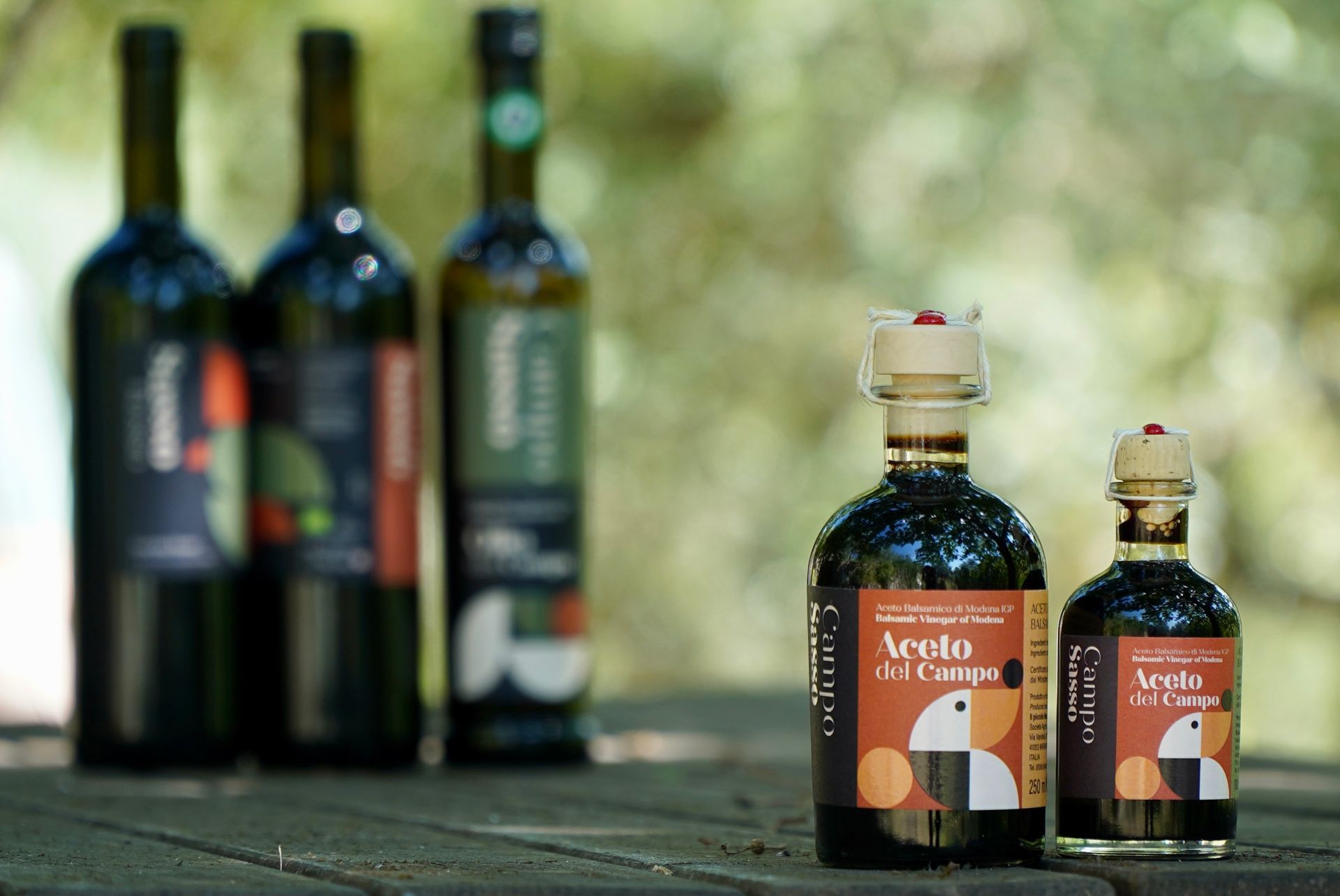
A secure screw cap is generally preferable to a decorative open pourer that allows continuous contact with air. Dark glass, coated metal or another light-protective container also helps preserve the oil.
What Should We Look for When Buying Olive Oil?
The best purchase is not necessarily the bottle with the most rustic label or the loudest claims about tradition.
Look first for traceability.
A protected designation such as Chianti Classico DOP connects the oil to a precisely defined territory, production specification and system of control. Chianti Classico olive oil received European DOP recognition in 2000, based on chemical and organoleptic characteristics linked to its geographical area.
Look for the harvest year and choose the most recent one available.
Prefer a bottle size that can be consumed reasonably quickly after opening. Protect it from light and heat and close it properly after each use.
Above all, taste it.
Fresh Tuscan extra-virgin olive oil is not neutral. Depending on the olive varieties, ripeness and production choices, it may express freshly cut grass, artichoke, green almond, aromatic herbs or olive leaf. Its bitterness and the peppery sensation felt in the throat are not defects. They are often associated with the phenolic compounds naturally present in a young, well-produced oil.
Olive oil should have character because it comes from a fruit, a place, a harvest and a series of human decisions.
Olio del Campo: An Oil Rooted in the Val d’Ema
At Jollie, our approach to olive oil follows the same philosophy that guides our work with wine, cheese, agriculture and hospitality: a product should be understood through its origin, the people who make it and the landscape that gives it meaning.
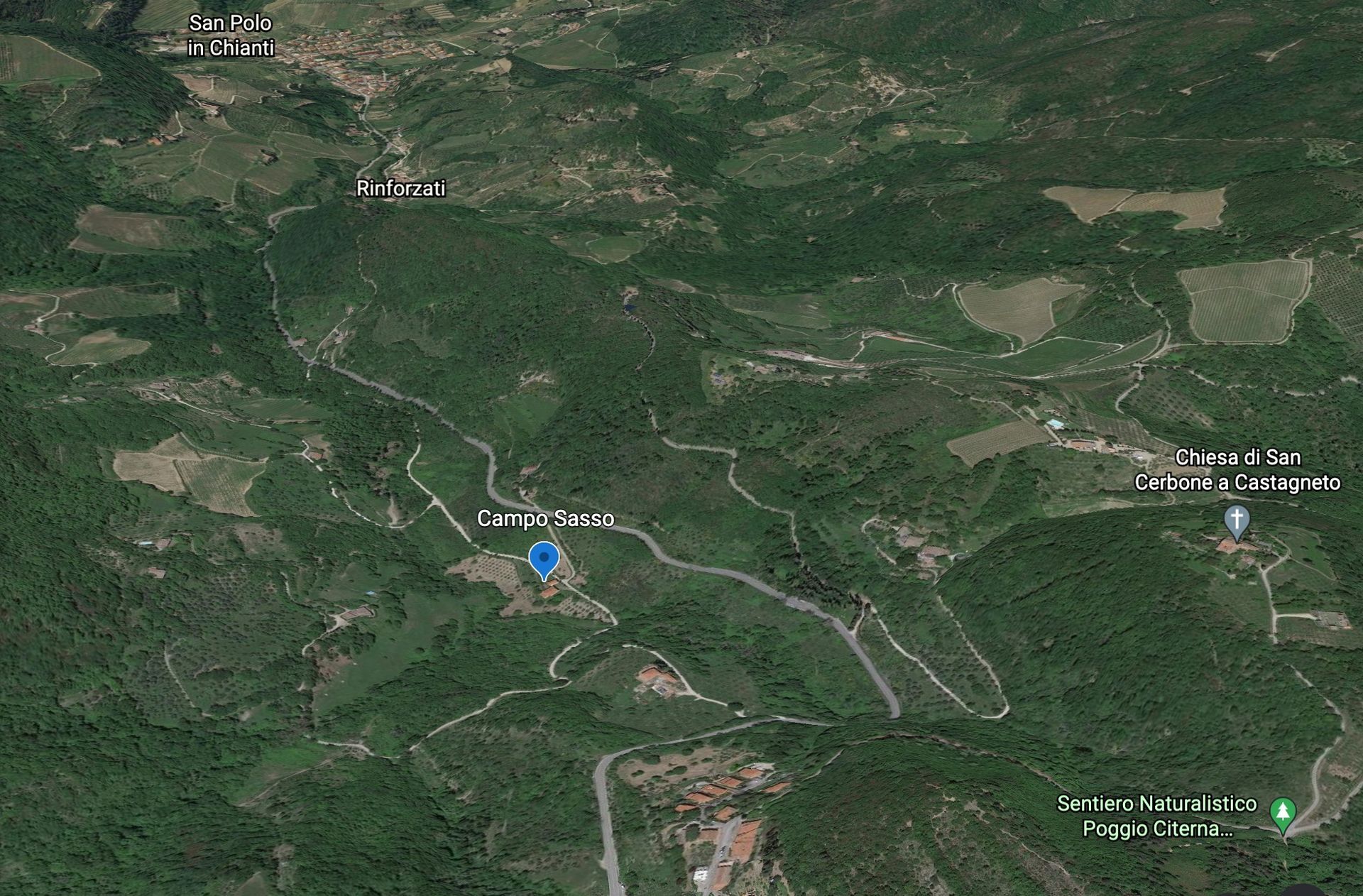
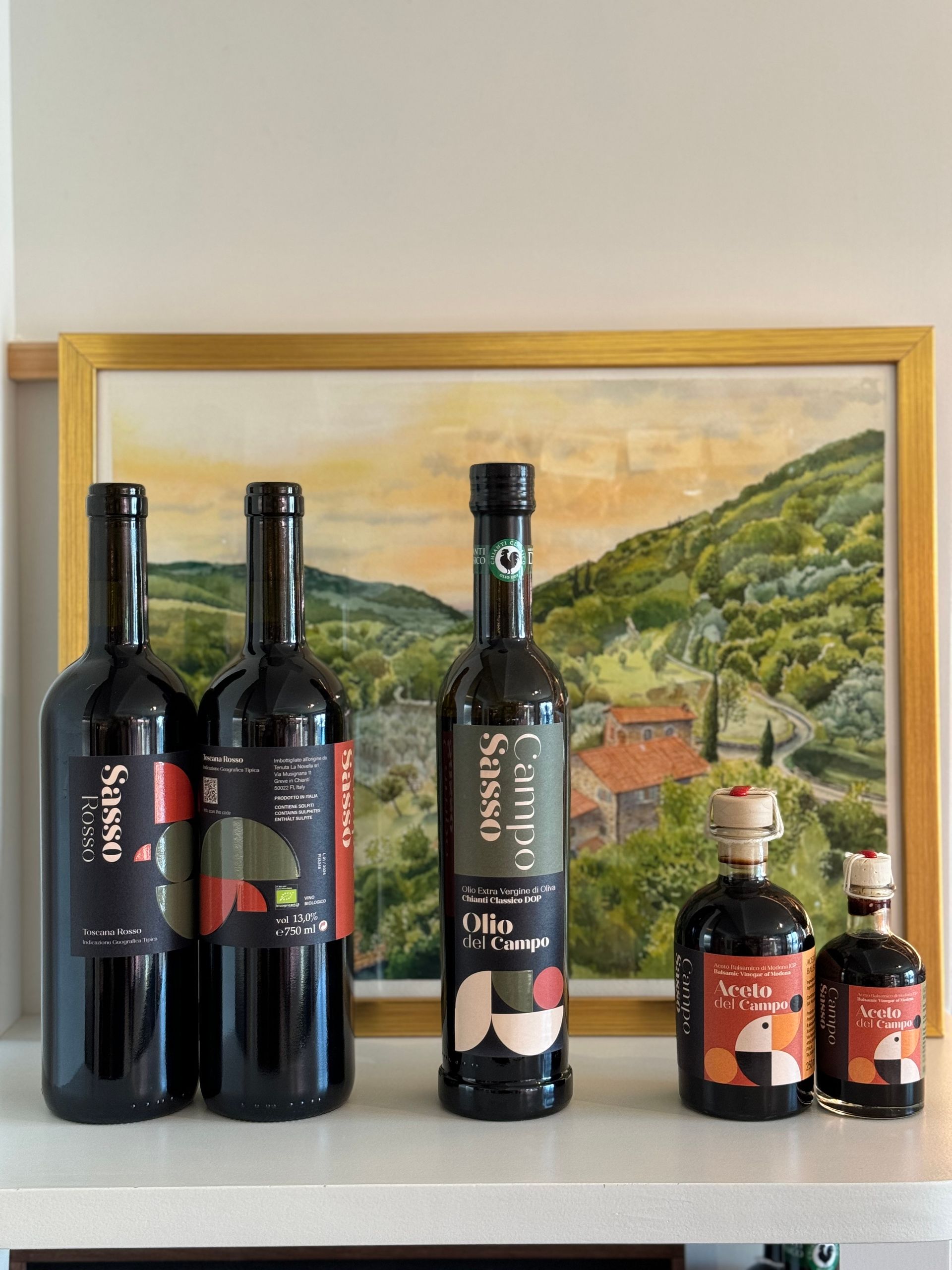
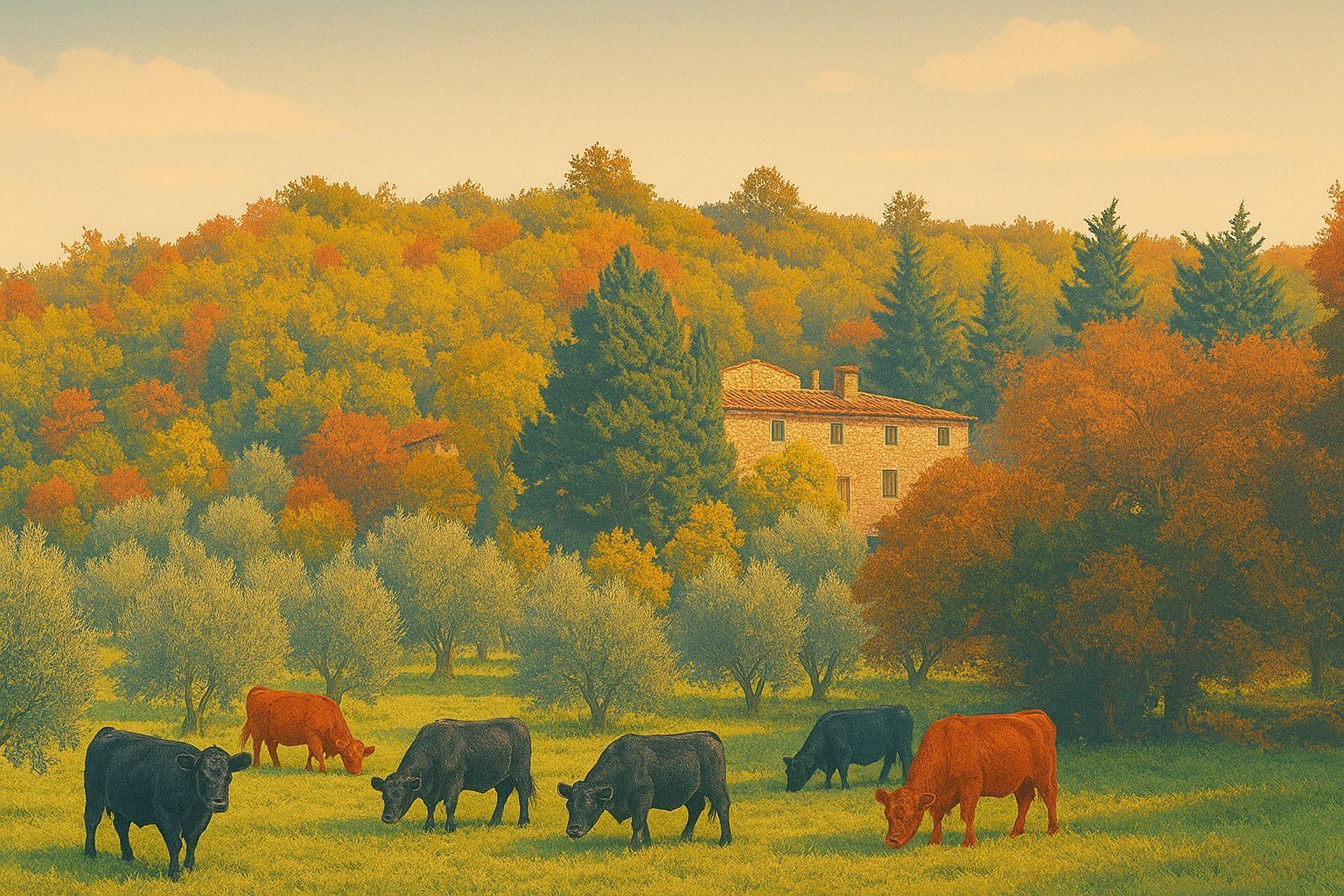
The olive trees surrounding Campo Sasso grow in the Val d’Ema, south of Florence, in a territory where olive groves, vineyards, woods and historic farms have shaped the landscape for generations.
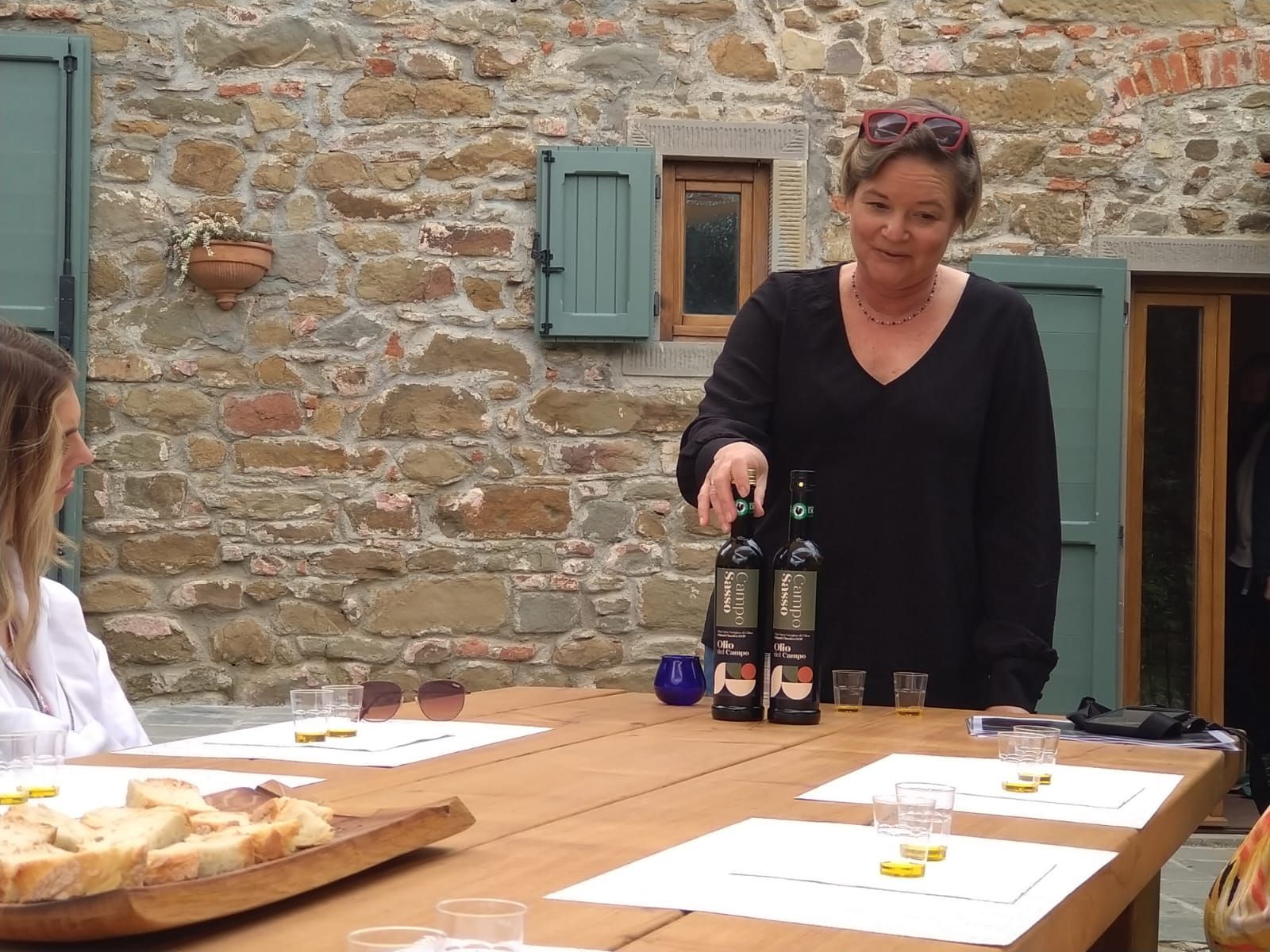
Our Olio del Campo is produced in partnership with Pruneti, whose expertise in olive cultivation and modern extraction allows the olives connected to Campo Sasso and its local environment to be transformed with precision and respect for their original character.
This partnership is not about reproducing an imaginary past or placing the words “first cold pressed” on a romantic label.
It is about combining a living Tuscan agricultural landscape with contemporary technical knowledge: harvesting healthy olives, processing them rapidly in a modern frantoio, controlling extraction conditions and protecting the oil from the moment it is produced until it reaches the table.
Because authentic olive oil is not simply extracted from Tuscany.
It is cultivated, interpreted and preserved by people.
For practical guidance on labels, harvest dates, DOP certification and sensory quality, read How to Recognise a Truly High-Quality Tuscan Extra Virgin Olive Oil
About the author: Pierre Gouttenoire is an agricultural engineer, oenologist and cheese affineur. He co-founded the Jollie ecosystem in Tuscany and oversees its wine, food and regenerative agriculture projects.