From the Bando of 1716 to European PDOs: What Is an Appellation Really Meant to Protect?
In Brief
European appellations were created to protect more than geographical names. From Cosimo III de’ Medici’s 1716 Bando in Tuscany to the French AOC, Italian DOC and DOCG, Spanish DO, Portuguese denominations and today’s European PDO system, their original purpose was to preserve the singular relationship between a product, its territory and a community of producers.
Unlike the American AVA system, which mainly guarantees grape origin, European appellations generally define collective production rules intended to express a recognisable typicity. Yet political compromises, overly broad boundaries and complex regulations can sometimes create only a façade of terroir. An appellation protects an origin, but it does not automatically guarantee quality, authenticity or a true expression of place.
From the Bando of 1716 to European PDOs: What Is an Appellation Really Meant to Protect?
An appellation is often perceived today as a quality label, a commercial hierarchy or a reassuring acronym printed on a bottle or food package.
That interpretation is understandable—but incomplete.
At its origin, an appellation was not designed primarily to rank products or make them easier to sell. Its deeper purpose was to recognise and protect a singular relationship between a product, a place and a community of producers.
An authentic appellation expresses the conviction that certain products cannot be fully separated from the landscapes, climates, soils, plants, animals, skills and collective histories from which they emerge.
The principle is therefore not simply that a product is made somewhere. It is that it could not be made in exactly the same way anywhere else.
This distinction remains essential if we want to understand both the cultural value of European appellations and the limitations of the system as it operates today.
Tuscany, 1716: Drawing a Line Around a Reputation
One of the earliest milestones in the history of protected wine origins occurred in Tuscany.
On 24 September 1716, Grand Duke Cosimo III de’ Medici issued the celebrated Bando Sopra la Dichiarazione de’ Confini delle quattro Regioni Chianti, Pomino, Carmignano e Valdarno di Sopra.
The decree formally delimited four Tuscan wine-producing areas:
- Chianti
- Pomino
- Carmignano
- Valdarno di Sopra
The measure was intended to protect both the production territories and the legitimate trade in wines associated with their names. It recognised that the reputation of these wines had become economically valuable—and therefore vulnerable to misuse.
This was not yet an appellation system in the modern European sense. There was no contemporary-style product specification defining authorised varieties, maximum yields, analytical criteria and certification procedures.
Nevertheless, the principle was already remarkably clear: a geographical name belonged collectively to a place and to the producers who legitimately worked within it. It should not be freely appropriated by wines made elsewhere.
The 1716 Bando was therefore both an act of geographical definition and an early recognition of collective intellectual property.
It established a question that remains at the heart of every appellation today: who has the right to use the name of a place?
From Tuscany to the Douro
Tuscany was not alone in attempting to protect the reputation of its wines.
In 1756, the Marquis of Pombal established the demarcated Douro region in Portugal. The new system defined the area associated with Port wine, regulated production and sought to control quality and trade.
The Douro is consequently considered one of the world’s oldest formally demarcated and regulated wine regions.
These early Tuscan and Portuguese measures had a strong economic dimension. Fraud, imitation and inconsistent quality could damage the reputation of an entire region. Protecting the geographical name was therefore a way of protecting both producers and consumers.
But behind this commercial necessity was a more profound idea: wines from Chianti, Carmignano or the Douro were not merely interchangeable fermented grape beverages. Their identities were connected to particular territories and to the practices developed within them.
Roquefort and the Recognition of a Collective Heritage
In France, the development of appellations was closely connected to legal efforts to prevent geographical names from becoming generic commercial descriptions.
Roquefort played a pioneering role.
The cheese had already received royal protection centuries earlier, but the French law of 1925 formally recognised Roquefort as the country’s first cheese appellation of origin.
This recognition was particularly significant because the identity of Roquefort could not be reduced to one ingredient or one manufacturing recipe. It depended on an entire production system: sheep’s milk, pastoral practices, cheesemaking knowledge and maturation in the natural caves of Roquefort-sur-Soulzon, where the local environment contributes to the development of the cheese.
Roquefort illustrates the true meaning of terroir particularly well. Terroir is not soil alone. It is an interaction between natural conditions and human knowledge.
The INAO defines terroir as a delimited geographical space in which a human community has developed collective production knowledge through the interaction of a physical and biological environment with human factors.
In other words, nature provides conditions, but people interpret, adapt and transmit them.
The Birth of the French AOC System
France created the formal Appellation d’Origine Contrôlée system through the decree-law of 30 July 1935. It also established the organisation that would become the Institut national de l’origine et de la qualité, or INAO.
The first wine AOCs were recognised from 1936 onwards.
The French system progressively defined appellations through detailed rules covering elements such as:
- geographical boundaries;
- authorised grape varieties;
- viticultural practices;
- maximum yields;
- minimum maturity or alcohol levels;
- winemaking and ageing methods;
- analytical and sensory characteristics.
The central idea was not simply to guarantee where the grapes came from. It was to preserve a recognised relationship between a place and a type of wine built through what French law described as “local, loyal and constant practices.”
An AOC was therefore conceived as a collective commitment. Producers agreed to limit some of their individual freedom in order to protect a shared identity and pass it on to future generations.
That collective dimension is fundamental. An appellation does not belong to one estate, one family or one company. It is a common heritage that can be used by every eligible producer who respects its specifications.
Spain, Italy and the Construction of National Systems
Other European wine-producing countries developed comparable systems, although according to their own histories and terminology.
Spain: Denominación de Origen
Spain’s 1932 Wine Statute established the legal foundations of the Denominación de Origen, or DO, system and introduced the principle of the Consejo Regulador.
A Consejo Regulador brought together growers and wine producers to oversee the geographical name, define production requirements and defend the collective interests associated with the denomination.
The Spanish system was subsequently reorganised and expanded, notably through the 1970 Wine Statute. It later developed higher or more specific categories, including Denominación de Origen Calificada for established regions meeting additional requirements.
As in France, the objective was to connect a geographical name with distinctive characteristics resulting from the natural environment, grape varieties and local methods of production and ageing.
Italy: DOC and DOCG
Italy established its modern national appellation framework with Presidential Decree No. 930 of 12 July 1963.
The system introduced two principal categories:
- Denominazione di Origine Controllata — DOC;
- Denominazione di Origine Controllata e Garantita — DOCG.
The first Italian DOC wines were recognised during the 1960s. DOCG was intended to distinguish denominations with an established reputation and stricter production and control requirements. The first DOCG recognitions followed in 1980.
This hierarchy is often interpreted by consumers as a simple scale of quality: DOCG above DOC, and DOC above other wines.
Legally, however, the hierarchy primarily reflects different levels of recognition, specifications and control. It does not mean that every DOCG wine is intrinsically better than every DOC or non-appellation wine.
A great wine can exist outside the highest classification, while an uninspiring wine can comply perfectly with all the technical requirements of a prestigious appellation.
Compliance is not the same as excellence.
Portugal: From the Douro to the Modern DO System
Portugal’s early demarcation of the Douro in 1756 preceded the modern national and European frameworks.
Over time, Portugal developed its Denominação de Origem Controlada system, commonly expressed today through the broader European Denominação de Origem Protegida. Its historic regions—including Douro, Porto, Dão, Vinho Verde and Madeira—became integrated into the European geographical indication structure.
Portugal therefore represents both one of the earliest experiments in geographical demarcation and a participant in today’s harmonised European system.
From National Appellations to the European PDO
In 1992, the European Community introduced a common system for protecting geographical names used for agricultural products and foodstuffs. Wine legislation was progressively incorporated into the same general philosophy, even though wine retained specific sectoral rules.
Today, national terms such as AOC, DOC, DOCG and DO coexist with the European category of Protected Designation of Origin:
- AOP in French;
- DOP in Italian, Spanish and Portuguese;
- PDO in English.
Under European law, a PDO identifies a product originating in a specific place or region whose qualities or characteristics are essentially or exclusively due to its geographical environment, including both natural and human factors. All the principal production stages must take place within the defined area.
A Protected Geographical Indication, or PGI, establishes a less exclusive relationship. A particular quality, reputation or characteristic must be attributable to the geographical origin, but not every production stage necessarily has to occur there.
The European framework transformed appellations into recognised intellectual property rights. It protects names against imitation, misuse and misleading references throughout the European Union and, through international agreements, in many markets beyond Europe.
But the legal protection remains only the outer structure. The cultural heart of an appellation is still the link between place, people and product.
Appellations Are Not Supposed to Be Recipes
A common misunderstanding is to think of an appellation specification as a recipe capable of producing typicity.
It is not.
A regulation can define an area, authorise certain varieties, set maximum yields or require a period of ageing. It cannot manufacture the intimate relationship between a product and its territory.
Typicity develops over time through repeated observation, adaptation and transmission. It emerges when producers learn how plants or animals respond to local conditions and gradually build practices capable of revealing those conditions.
An appellation should codify this accumulated knowledge without reducing it to a fixed formula.
This is a difficult balance. If the rules are too vague, the geographical name may cease to have a coherent meaning. If they are too rigid, they can freeze practices, discourage innovation and prevent producers from responding to climate change.
Tradition is not the mechanical repetition of the past. It is a living process through which knowledge is continuously interpreted and transmitted.
The American AVA System: Origin Without a Collective Wine Style
The United States created the American Viticultural Area system at federal level around a different principle.
An AVA is a delimited grape-growing region with a recognised name and geographical or climatic features that distinguish it from surrounding areas. To use an AVA name on a label, at least 85% of the wine must come from grapes grown within that area.
The AVA system therefore provides useful and legally protected information about origin.
However, it generally does not prescribe:
- which grape varieties must be planted;
- maximum vineyard yields;
- vine-training or cultivation methods;
- minimum grape maturity;
- winemaking techniques;
- ageing periods;
- a particular sensory profile.
A Napa Valley AVA wine may be made from Cabernet Sauvignon, Chardonnay, Zinfandel or many other varieties. Producers retain broad freedom over how the wine is grown and made.
This is the principal philosophical difference.
An AVA says, in essence: the grapes come from this geographically distinct place.
A European PDO seeks to say something more ambitious: this product comes from this place and belongs to a collectively defined expression developed through the interaction of the place and its producers.
The AVA system is more flexible and often easier for innovative producers to navigate. The European model offers a stronger definition of collective identity but can become more restrictive, bureaucratic and politically contested.
Neither system automatically guarantees that a wine is good. Both protect origin, but they do not attach the same meaning to it.
When Administrative Boundaries Replace the Reality of Terroir
The philosophy of appellations is powerful. Its implementation is inevitably imperfect.
Terroir does not always follow municipal borders, roads or historical administrative limits. Soil, altitude, exposure, water availability and mesoclimate can change significantly within the same appellation. Conversely, vineyards separated by an official boundary may share very similar natural conditions.
Many appellations cover territories that are too large or too heterogeneous to express one recognisable identity. A regional name may include hillsides, valley floors, different geological formations and contrasting climatic conditions.
The resulting “typicity” can become a statistical or administrative average rather than a faithful expression of terroir.
Boundaries and specifications are also shaped by human negotiations. Local institutions, landowners, growers, cooperatives and established companies may have conflicting economic interests. Political influence can affect which villages or parcels are included, which varieties are authorised and which practices are defined as traditional.
A production rule may therefore reflect the balance of power within a region as much as its soil or climate.
This does not make the appellation illegitimate. Human factors are part of terroir. But it means that an appellation should never be presented as a purely scientific translation of nature.
It is also a social, historical and political construction.
When Typicity Becomes a Façade
The greatest risk arises when the collective name becomes more important than the collective identity it was supposed to protect.
A famous appellation may command higher prices even when its rules allow industrial production, high yields, grapes from very different subzones or methods primarily chosen for consistency and volume.
In such cases, the designation may continue to protect geographical origin while offering only a weak guarantee of genuine typicity.
The specification can be respected on paper while the product becomes increasingly standardised in the glass.
The opposite situation also exists. Innovative producers may leave an appellation because its rules prevent them from using forgotten local varieties, adapting their farming to a changing climate or developing a style they consider more faithful to their particular vineyard.
An appellation can therefore exclude some of the most thoughtful expressions of its own territory.
This is why the absence of a PDO does not necessarily mean the absence of terroir—and the presence of a PDO does not automatically prove its expression.
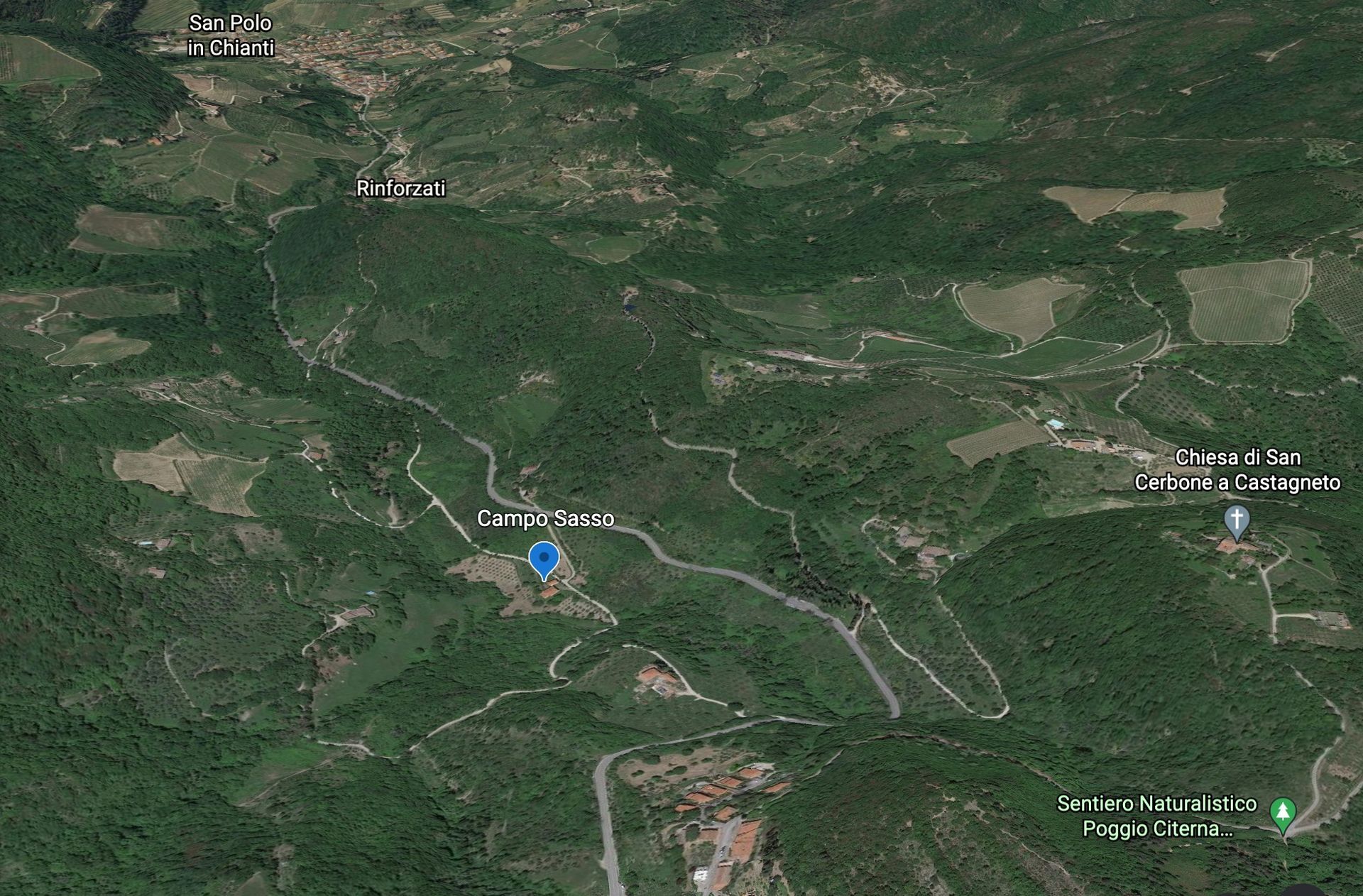
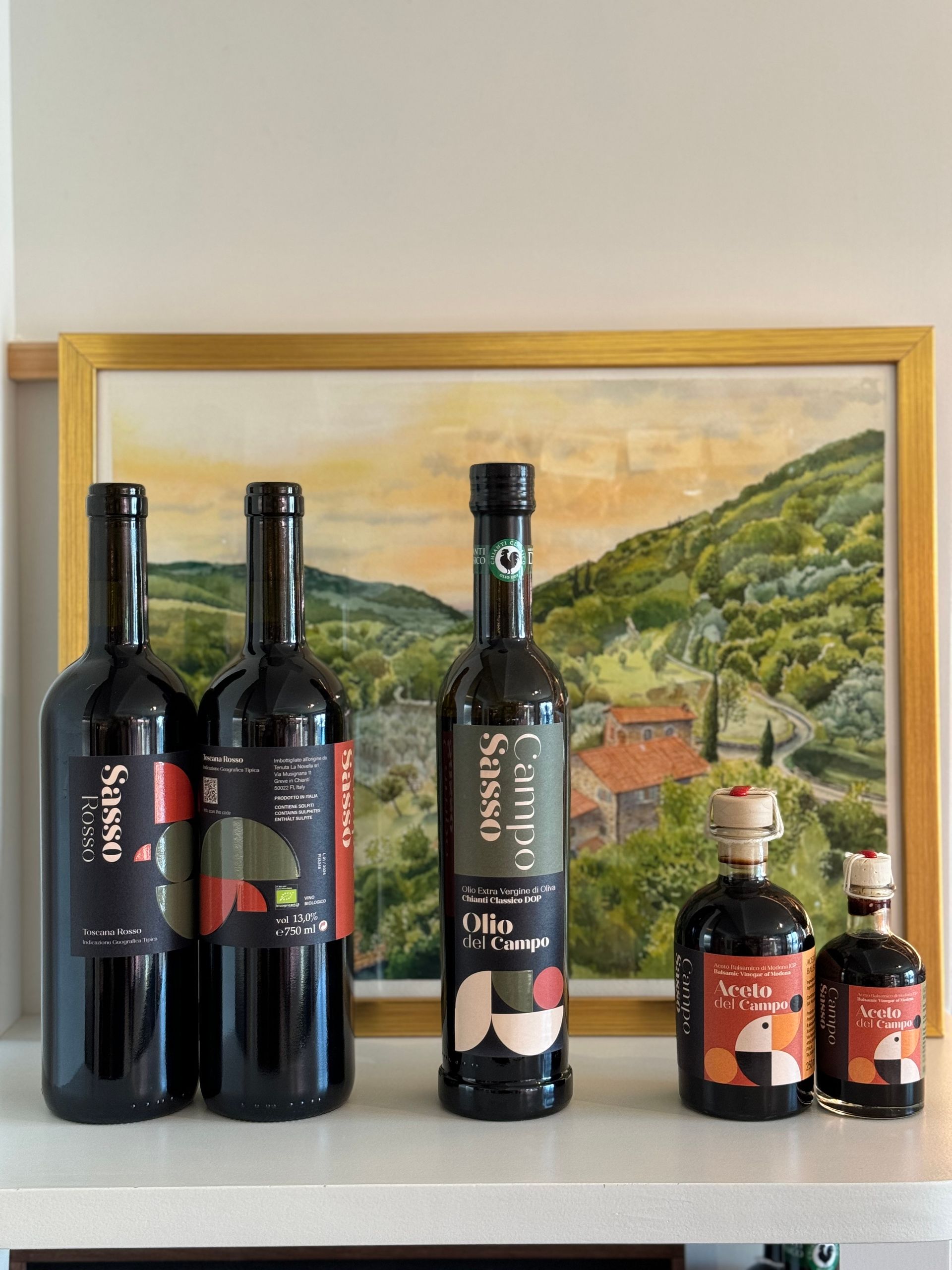
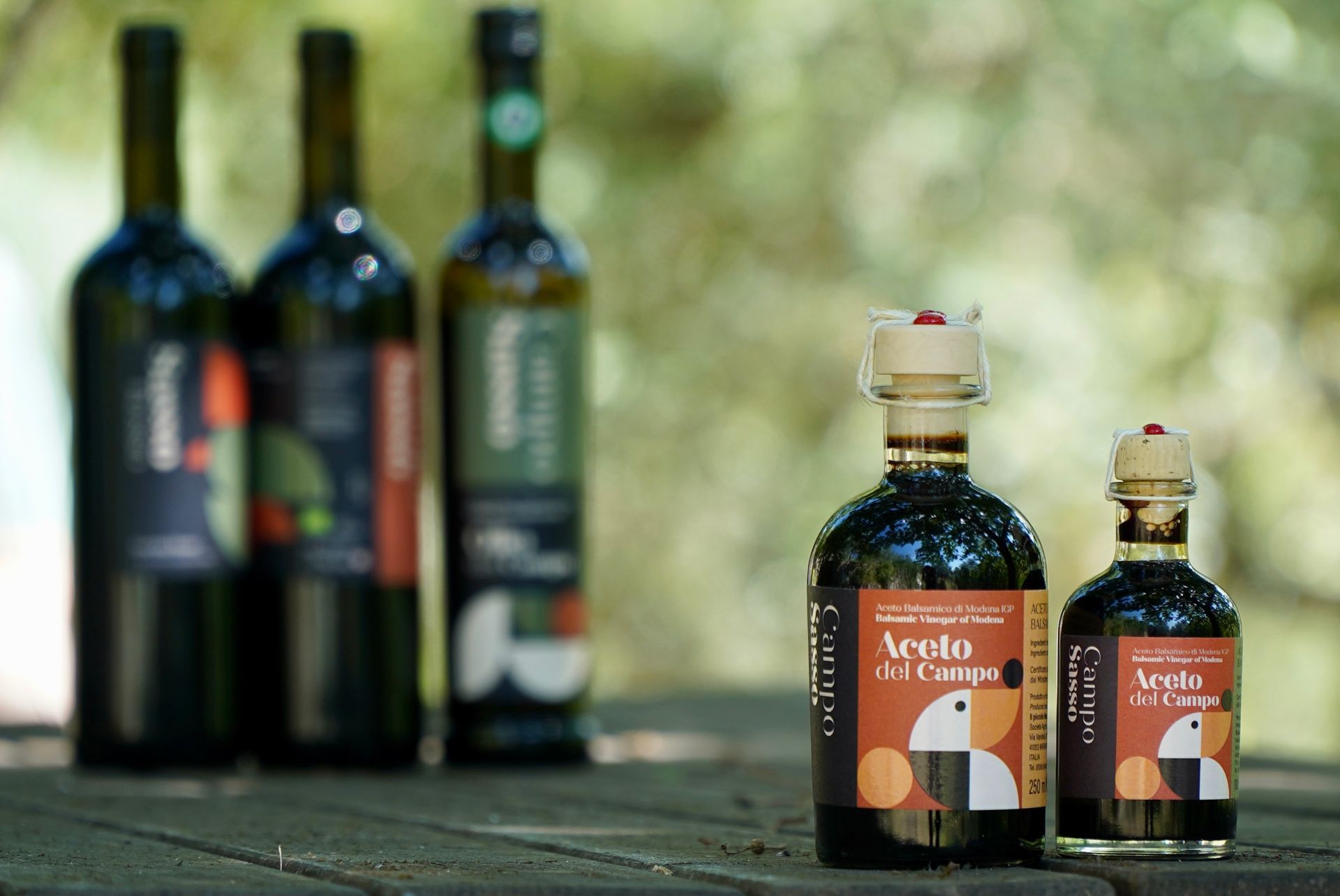
Sasso Rosso offers a concrete example of this freedom beyond appellation rules. Although the wine is produced within the Chianti Classico geographical area, it is not labelled as a DOCG Chianti Classico. Pierre chose to work outside the denomination’s specifications in order to create a wine conceived specifically for pairing with cheese, while expressing his own interpretation of the landscape, character and spirit of the Val d’Ema
A System That Has Become Difficult for Consumers to Read
Europe now has an extraordinary number of PDOs, PGIs, national terms, subzones, classifications, traditional mentions and producer-specific indications.
The system protects a remarkable diversity of rural heritage. Yet it has also become extremely difficult for consumers to understand.
DOC, DOCG, DO, DOCa, AOC, AOP, DOP, PDO, IGP, PGI, village names, crus, subzones and ageing categories can create an illusion of precision without necessarily explaining what a product will taste like or why its place matters.
Consumers may consequently interpret the pyramid as a simple quality ranking. Producers and retailers may reinforce this perception because a hierarchy is easier to market than the complex reality of terroir.
But an appellation was never meant to replace curiosity, knowledge or judgement.
It should be a gateway to a territory, not the end of the conversation.
Reading Beyond the Acronym
An appellation provides valuable information, but it should be read together with other questions:
- Who produced the wine or food?
- Where exactly within the appellation was it produced?
- What are the soils, altitude and climatic conditions?
- Which plants, breeds or grape varieties were used?
- How were they cultivated or raised?
- What choices were made during production?
- Does the producer seek to express the place or merely comply with its minimum rules?
- How has the product specification evolved, and who influenced it?
The name of the producer may ultimately reveal as much as the name of the appellation.
Two wines carrying the same prestigious designation can express very different philosophies: one may be deeply rooted in its landscape, while another may use the appellation primarily as a commercial identity.
Protecting the Name—or Transmitting the Place?
From Cosimo III de’ Medici’s 1716 Bando to the contemporary European PDO system, appellations have protected some of Europe’s most important agricultural and cultural heritages.
They have prevented geographical names from becoming generic. They have defended producers against imitation, maintained collective knowledge and helped preserve products that might otherwise have disappeared.
But their legitimacy cannot depend on legal protection alone.
An appellation remains meaningful only when producers continue to question what makes their territory singular, adapt their work to its realities and transmit that understanding to future generations.
The purpose is not to produce uniformity. It is to preserve a coherent diversity.
At Jollie, we believe that an appellation should be approached as a starting point rather than a definitive judgement. Through wine tours, cheese tastings and conversations with farmers and artisans, we seek to move beyond the acronym on the label and understand how each producer interprets a place.
Because terroir cannot be reduced to a boundary on a map.
It is a living relationship between land, climate, biodiversity, human knowledge and time—and it survives only when people continue to cultivate it.
Official sources
- Tuscan Regional Council — 1716 Bando of Cosimo III de’ Medici
- INAO — Origins of appellations and recognition of Roquefort
- Italian Ministry of Agriculture — history of DPR 930/1963
- Spanish Ministry of Agriculture — 1932 Wine Statute
- European Commission — geographical indications and quality schemes
- European Union — Regulation 2024/1143 on geographical indications
- US TTB — American Viticultural Areas and labelling requirements
About the author: Pierre Gouttenoire is an agricultural engineer, oenologist and cheese affineur. He co-founded the Jollie ecosystem in Tuscany and oversees its wine, food and regenerative agriculture projects.
Frequently Asked Questions About Wine Appellations
What does a European wine appellation guarantee?
A European appellation guarantees a defined geographical origin and compliance with collective production specifications. Depending on the appellation, these may regulate grape varieties, yields, vineyard practices, winemaking methods and ageing. It does not guarantee that every wine will offer the same level of quality.
What is the difference between AOC, DOC, DOCG, DO and PDO?
AOC, DOC, DOCG and DO are national terms developed in France, Italy and Spain. PDO is the harmonised European category. These national designations now operate within the broader European Protected Designation of Origin system.
Does DOCG mean that a wine is better than a DOC or IGT wine?
Not necessarily. DOCG indicates stricter specifications, controls and an established collective reputation. It guarantees conformity with the denomination, but individual quality still depends on the vineyard, vintage, producer and winemaking decisions.
How is an American AVA different from a European PDO?
An AVA primarily identifies the geographical origin of the grapes. A European PDO generally goes further by defining collective production rules intended to preserve a recognised relationship between the product, its territory and local human knowledge.
Why is Sasso Rosso not a Chianti Classico DOCG?
Although its grapes come from the Chianti Classico area and the Val d’Ema, Sasso Rosso is intentionally produced as an IGT Toscana Rosso. Pierre developed it outside the DOCG specifications to blend different grape varieties, vintages and maturation methods, creating a wine specifically conceived for cheese pairing and expressing his own interpretation of the Val d’Ema.