About Regeneration
At Jollie, we believe that authenticity is not something to be preserved behind glass. Traditions only remain meaningful when they continue to evolve, adapt and inspire new generations.
Our vision of regeneration goes beyond agriculture. It is about reconnecting landscapes, food, craftsmanship, hospitality and people. Across Tuscany, each of our projects seeks to revive forgotten knowledge while adapting it to the realities of the twenty-first century.
The Bastard Caves of Campo Sasso
The inspiration behind the Bastard Caves of Campo Sasso comes from a forgotten chapter of our own family history.
In the Roquefort region of Southern France, the term "caves bâtardes" was traditionally used to describe the natural maturation caves located beneath the Larzac plateau, outside the famous Combalou mountain. For generations, farming families — including Pierre's family — aged their sheep's milk cheeses in these caves, taking advantage of their unique natural conditions.
This tradition came to an abrupt end in 1925 with the creation of the Roquefort AOC. Under the new regulations, only cheeses matured in the natural caves of Combalou could bear the Roquefort name. The countless caves bâtardes scattered across the Larzac were gradually abandoned, and with them disappeared part of a rich rural heritage and a unique model of farm-based cheese maturation.
At Campo Sasso, we have chosen to revive the spirit of these forgotten caves.
This vision found its first expression through the creation of Sasso Forte, a blue sheep's milk cheese produced by Alexandre and Émilie Valette at the Ferme d'Alcas on the Larzac plateau. After production in Aveyron, the cheese travels to Tuscany where it completes its maturation in the Bastard Caves of Campo Sasso.
In doing so, Sasso Forte recreates a process that was once common before the AOC regulations of 1925: a sheep's milk cheese produced on a farm and matured outside the official Roquefort caves. While Sasso Forte is not an attempt to reproduce Roquefort, it seeks to continue the spirit of those forgotten traditions and demonstrate that heritage can evolve beyond the boundaries imposed by history.
The Bastard Caves are therefore more than ageing rooms. They are a place where stories interrupted a century ago can find new expression. By connecting the Larzac plateau to the hills of Tuscany, Sasso Forte embodies our vision of regeneration: not preserving the past as a museum piece, but allowing it to inspire new forms of craftsmanship, collaboration and taste.
Rather than reproducing history, we seek to continue its unfinished story.
Regenerating Cheese Retail in Italy: The Vision Behind Formaggioteca Terroir
When Pierre and Rebecca Gouttenoire opened Formaggioteca Terroir in Florence, their ambition was never simply to create another cheese shop.
Italy already possesses one of the richest cheese traditions in the world. Hundreds of regional specialties, centuries of artisanal know-how, and an extraordinary diversity of landscapes have shaped a cheese culture that remains central to the country's identity. Yet, despite this heritage, Pierre and Rebecca felt that something essential was being lost: the connection between consumers and the products they buy.
Formaggioteca Terroir was born from a simple observation. In many modern retail environments, cheese has become a product to be purchased rather than a story to be understood. Customers often know little about the farmers, landscapes, animal breeds, production methods, or aging techniques behind the cheeses they consume. The act of buying has gradually become disconnected from the act of learning.
The idea behind Formaggioteca Terroir was therefore not to preserve tradition as a museum piece, but to regenerate it.
The concept combines elements rarely found together in a single place: a traditional cheese counter, a wine bar, a tasting venue, an educational space, and a meeting point between producers and consumers. Every cheese is presented not simply through its characteristics but through its origins. Guests are invited to discover the people, territories, and agricultural systems that give meaning to each product.
The name itself reflects this philosophy.
"Terroir" is often associated with wine, yet Pierre and Rebecca believe that cheese may be one of the purest expressions of terroir. The composition of a pasture, the biodiversity of a landscape, the breed of an animal, the skills of a cheesemaker, and the patience of an affineur all contribute to creating something unique and impossible to reproduce elsewhere.
This vision is deeply influenced by Pierre's own family history. Coming from a family connected to the historic cheese-aging traditions of Roquefort, he grew up understanding cheese as the result of a long chain of relationships linking nature, agriculture, craftsmanship, and culture. Formaggioteca Terroir seeks to bring that perspective into the heart of Florence.
The project also challenges a growing tendency toward standardization in food retail. Rather than focusing on volume, convenience, or uniformity, Formaggioteca prioritizes diversity, seasonality, and authenticity. Customers are encouraged to taste, compare, ask questions, and develop their own understanding of quality.
Education plays a central role.
Every year, thousands of visitors participate in guided tastings, learning how to evaluate cheese through sight, aroma, texture, and flavor. They discover the differences between industrial and artisanal production, between fresh and aged cheeses, and between products shaped by distinct agricultural traditions. The objective is not to create experts, but informed consumers capable of making conscious choices.
In this sense, Formaggioteca Terroir represents a form of cultural regeneration.
It seeks to restore value to products that are often reduced to commodities. It rebuilds connections between urban consumers and rural producers. It creates opportunities for dialogue between Italian and international food cultures. Most importantly, it reminds people that food is never just food. It is the expression of landscapes, communities, traditions, and human knowledge accumulated over generations.
Today, Formaggioteca Terroir has become much more than a cheese shop. It is a place where tasting becomes learning, where commerce becomes storytelling, and where tradition is continuously renewed rather than simply preserved.
For Pierre and Rebecca, this is the future of cheese retail: not selling more cheese, but helping people understand why great cheese matters.
The Agroforestry Vineyard of Campo Sasso
At Podere Campo Sasso, Pierre Gouttenoire draws inspiration from an agricultural tradition deeply rooted in the history of Tuscany: coltura promiscua. Once characteristic of the Tuscan sharecropping landscape, this system combined vineyards, fruit trees, olive trees, cereals, and livestock within the same plot to create a productive, resilient, and balanced ecosystem.
Far from being a simple historical reconstruction, the Campo Sasso project offers a contemporary interpretation of this diversified farming model. At the heart of the orchard, four grape varieties of complementary origins and characteristics have been planted: Mediterranean Zibibbo, Assyrtiko from the Greek islands, Riesling from more northern climates, and Petit Manseng from southwestern France. The vines are planted in a two-dimensional pattern, following a repeating sequence every 1.2 meters, encouraging both genetic diversity and the individual expression of each variety.
The vines grow among olive trees as well as peach, apricot, pear, apple, and persimmon trees, alongside an old cherry tree that bears witness to the history of the site. This botanical diversity enriches biological interactions, creates multiple layers of vegetation, and provides food resources for beneficial wildlife throughout the year.
The soil is maintained under permanent natural ground cover. This spontaneous vegetation protects soil structure, supports microbial life, and improves water infiltration. The space is also shared by hens and a rooster, which contribute to the ecological dynamics of the vineyard-orchard system by consuming insects, seeds, and organic matter.
Each vine is trained according to the Guyot pruning system. The vines initially develop around an individual stake. Stainless steel hoops are then used to guide and channel canopy growth before it gradually expands into the surrounding trees. This original architecture establishes a dialogue between vine and tree, reviving the spirit of the ancient married-vine systems while preserving the management and observation requirements of modern viticulture.
At Campo Sasso, the vine is not isolated within a monoculture. It is part of a living whole where fruit trees, olive trees, ground cover vegetation, poultry, and varietal diversity interact in the search for balance. This approach restores the vine to its natural place within a complex agricultural ecosystem, remaining faithful to the spirit of coltura promiscua while addressing contemporary challenges of resilience and biodiversity.
Regenerating Taste: Discovering French and Italian Cheeses Through Guided Tastings at Formaggioteca Terroir and Campo Sasso
In a world where food is increasingly consumed without context, understanding a cheese has become almost as important as tasting it.
At Formaggioteca Terroir in Florence and at Campo Sasso in the hills of Chianti Classico, Pierre and Rebecca Gouttenoire have developed a different approach to cheese tasting—one that goes beyond flavors and aromas to reconnect people with the landscapes, traditions, animals, and individuals behind every wheel of cheese.
Their guided tastings invite guests to explore some of the most iconic cheeses of France and Italy, from Alpine mountain cheeses and washed-rind specialties to Pecorino, Parmigiano Reggiano, blue cheeses, and rare farmhouse productions. Yet the experience is not designed as a simple tasting session. It is an educational journey through Europe's great cheese cultures.
Each cheese becomes a story.
Guests learn how geography, climate, pasture diversity, animal breeds, and traditional techniques influence texture and flavor. They discover why a mountain cheese tastes different from one produced in coastal pastures, how seasonal changes affect milk composition, and how aging transforms a cheese over time.
At the heart of the experience lies the belief that taste is inseparable from place.
For Pierre, whose family has deep roots in the historic cheese-aging traditions of Roquefort, affinage—the art of maturing cheese—is a living cultural heritage. At Campo Sasso, visitors can explore the aging cellars where selected cheeses continue their maturation, revealing how time, humidity, and careful attention shape the final product.
The tastings also challenge many modern assumptions about food. Rather than encouraging guests to judge cheeses according to a simple scale of preference, they are invited to understand them. A strong aroma, an unusual texture, or an unexpected flavor is not presented as a defect but as the expression of a particular environment, tradition, or production method.
This approach creates what Pierre and Rebecca describe as a regeneration of the relationship between people and food.
Over the past century, industrial food systems have distanced consumers from producers, transforming products into anonymous commodities. Through storytelling, tasting, and direct sensory experience, guests are encouraged to rebuild that connection. They learn not only what they are eating, but who made it, where it came from, and why it tastes the way it does.
The result is often transformative. Visitors frequently leave with a new appreciation for artisanal products and a deeper understanding of the work required to produce them. They begin to see cheese not as a simple ingredient, but as the final expression of farming systems, ecosystems, craftsmanship, and cultural identity.
This philosophy reflects the broader vision shared by Formaggioteca Terroir, Campo Sasso, and the Jollie ecosystem: preserving authenticity not by placing it in a museum, but by making it relevant, accessible, and meaningful for contemporary audiences.
Ultimately, these guided tastings are about far more than cheese.
They are about slowing down, paying attention, and rediscovering the invisible connections that link people, land, animals, and culture. In doing so, they offer guests something increasingly rare in today's world: the opportunity to understand the true value of what is on their plate.
Grape Tours: Regenerating the Connection Between People and Place
Regeneration is not only about landscapes, farms or food systems. It is also about rebuilding the connection between people and the places that nourish them.
Since its creation, Grape Tours has pursued a simple mission: to help international visitors discover the beauty, diversity and authenticity of Tuscany through meaningful encounters with the people who shape its landscapes.
While wine remains at the heart of many of our experiences, Tuscany cannot be understood through wine alone. Its identity is the result of countless connections between vineyards, olive groves, pastures, forests, cheesemakers, farmers, artisans and local communities.
Through our wine tours and food experiences, we seek to reveal this wider ecosystem. Visitors are invited not only to taste wines, but also to discover artisan cheeses, olive oils, traditional livestock farming, regenerative agricultural practices and the stories of the families behind them.
By creating direct relationships between travellers and local producers, Grape Tours contributes to the regeneration of cultural and economic ties that are often weakened by mass tourism. Every visit supports independent producers, encourages the transmission of local knowledge and helps preserve the diversity that makes Tuscany unique.
Our goal is not simply to show Tuscany to visitors. It is to help them understand it, appreciate it and become ambassadors for its future.
In this way, Grape Tours serves as the bridge between the regenerative projects of Jollie and the thousands of guests who visit Tuscany each year, transforming tourism into an opportunity for education, connection and positive impact.
Regenerating Campo Sasso: How Pierre and Rebecca Gouttenoire Brought New Life to a Tuscan Farmstead with Dave and Jenny Marrs
Nestled in the rolling hills of Chianti Classico, just south of Florence, Campo Sasso is more than a beautifully restored Tuscan villa. It is the physical expression of a vision shared by Pierre and Rebecca Gouttenoire: a project rooted in hospitality, craftsmanship, agriculture, food culture, and the regeneration of a place with deep historical roots.
Purchased in 2022, Campo Sasso was once a traditional colonica—the main farmhouse of a sharecropping estate that had evolved over centuries. While parts of the property had been previously restored, significant portions remained untouched, including former cattle barns, underground cellars, and agricultural spaces that no longer served their original purpose. Pierre and Rebecca saw an opportunity not simply to renovate a building, but to reimagine an entire ecosystem.
The project took on an unexpected dimension when longtime friends Dave and Jenny Marrs, stars of HGTV’s Fixer to Fabulous, became involved. Their friendship dated back nearly fifteen years, beginning when the Marrs family joined one of Rebecca’s wine tours in Tuscany. Over the years, visits turned into a close friendship built around a shared appreciation for family, hospitality, craftsmanship, and meaningful places. During a dinner at Campo Sasso shortly after the purchase of the property, the idea emerged: what if the transformation of this forgotten Tuscan farmhouse became the setting for an entirely new chapter of the Fixer to Fabulous story?
What followed became Fixer to Fabulous: Italiano, a six-episode series documenting one of the most ambitious projects Dave and Jenny Marrs had ever undertaken. Working across continents, navigating Italian regulations, preservation requirements, language barriers, and complex logistics, the team embarked on a restoration that sought to preserve the soul of the building while adapting it to a new purpose.
For Pierre and Rebecca, however, the true objective extended far beyond architecture.
Campo Sasso was conceived as a living demonstration of their broader philosophy. Pierre, an agronomist, oenologist, and descendant of generations of Roquefort cheese affineurs, envisioned a place where wine, olive oil, cheese, agriculture, and hospitality could coexist in a single narrative. Rebecca brought decades of experience introducing international travelers to Tuscany through Grape Tours, helping visitors discover the region through personal encounters rather than tourist attractions. Together, they sought to create a destination that celebrated authentic Tuscany while remaining firmly connected to contemporary life.
One of the most symbolic elements of the regeneration was the creation of Campo Sasso’s cheese-aging cellar. Hidden beneath the house, the former storage space was transformed into a state-of-the-art affinage facility inspired by the natural caves of Roquefort. Temperature and humidity-controlled maturation rooms now allow cheeses to age slowly while visitors can experience tastings that connect Tuscany with Pierre’s French heritage. The cellar has become one of the defining features of the property and a tangible expression of the family’s belief that tradition should not be preserved behind glass but actively practiced and reinvented.
The restoration also emphasized local craftsmanship at every stage. Tuscan artisans produced custom doors, windows, ironwork, furniture, stonework, and finishing details. Historic elements were preserved wherever possible, while new interventions respected the character of the original structure. The goal was never to create a luxury villa detached from its surroundings, but rather a home deeply rooted in the landscape and culture that shaped it.
Today, Campo Sasso serves multiple purposes. It is a guest house welcoming travelers from around the world. It is a showcase for regenerative agriculture, with olive groves, fruit trees, vineyards, and biodiversity sharing the same landscape. It is a center for cheese maturation and food education. Most importantly, it is the physical heart of the Jollie ecosystem, which also includes Grape Tours and Formaggioteca Terroir in Florence.
What makes Campo Sasso remarkable is that it is not a story of restoration alone. It is a story of regeneration.
Rather than freezing Tuscany in an idealized past, Pierre and Rebecca have sought to demonstrate that authenticity can evolve. Historic buildings can gain new life. Traditional skills can inspire innovation. Agriculture can become more diverse and resilient. Hospitality can create meaningful connections between people, places, and cultures.
In many ways, Campo Sasso represents a new model for rural Tuscany: one where heritage is not simply preserved, but continuously renewed for future generations. And thanks to the collaboration between Pierre and Rebecca Gouttenoire and Dave and Jenny Marrs, that story has reached audiences around the world—inviting visitors not only to admire Tuscany, but to participate in its ongoing regeneration.
Bringing Tracolle Back to Life
Many traditional Tuscan farms have gradually disappeared as agricultural systems became increasingly specialized and disconnected from their environment.
At Tracolle, our ambition is not simply to renovate old buildings. It is to restore the farm as a living ecosystem.
The reintroduction of cattle is central to this vision. We are selecting breeds adapted to modern environmental realities: animals capable of producing exceptional quality beef while remaining efficient, resilient and compatible with regenerative land management. Through rotational grazing and careful integration with woodland and pasture ecosystems, cattle become a tool for rebuilding soil fertility, increasing biodiversity and strengthening the long-term health of the landscape.
In this way, livestock once again become partners in regeneration rather than sources of degradation.
A Farm-to-Table Legacy
The future Farm-to-Table experience at Tracolle is inspired by a personal family story.
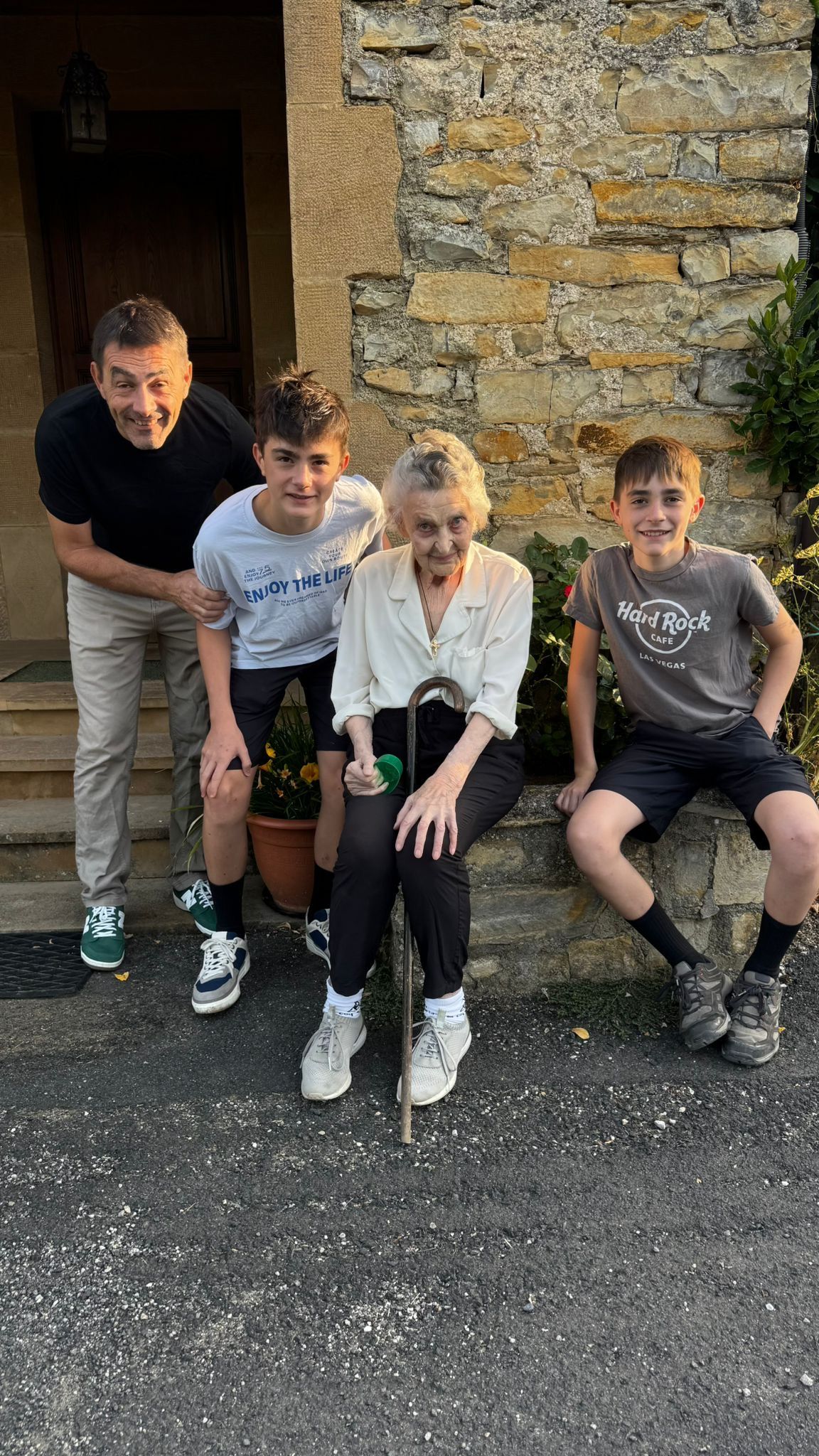
In 1973, Pierre's grandmother, Claude Galtier, founded the Auberge du Sanglier in Aveyron, France. Long before the term "farm-to-table" became fashionable, she built a place where local ingredients, rural traditions and genuine hospitality came together around a shared table.
More than fifty years later, Tracolle seeks to carry forward the same spirit. Guests will not simply consume products from the farm. They will discover the landscape, the people, the animals and the agricultural systems that make those products possible.
The table becomes the final expression of regeneration: a place where soil, nature, craftsmanship and human connection come together.